Lençóis Maranhenses, Brazil

A journey through an unique landscape and culture in the northeast of Brazil

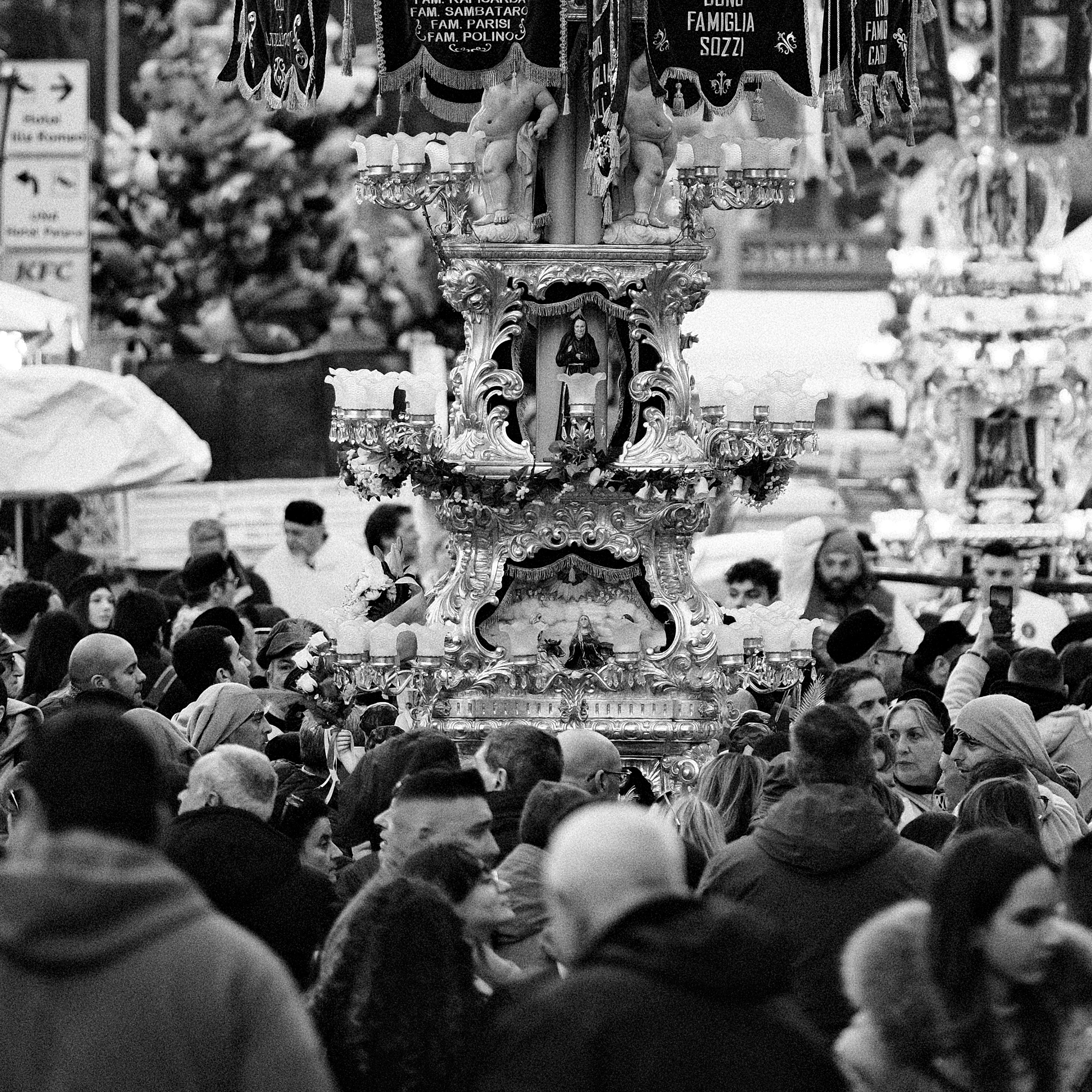
We began our adventure the11th of July 2025 from the town of São Luis, the capital city of the Maranhão State. It was mid-July and hence we made it in time to catch the regional 'São João' festival that takes place nation-wide in June and in some cases also July, as for example in Maranhão and in a handful of other States.
— São Luis —
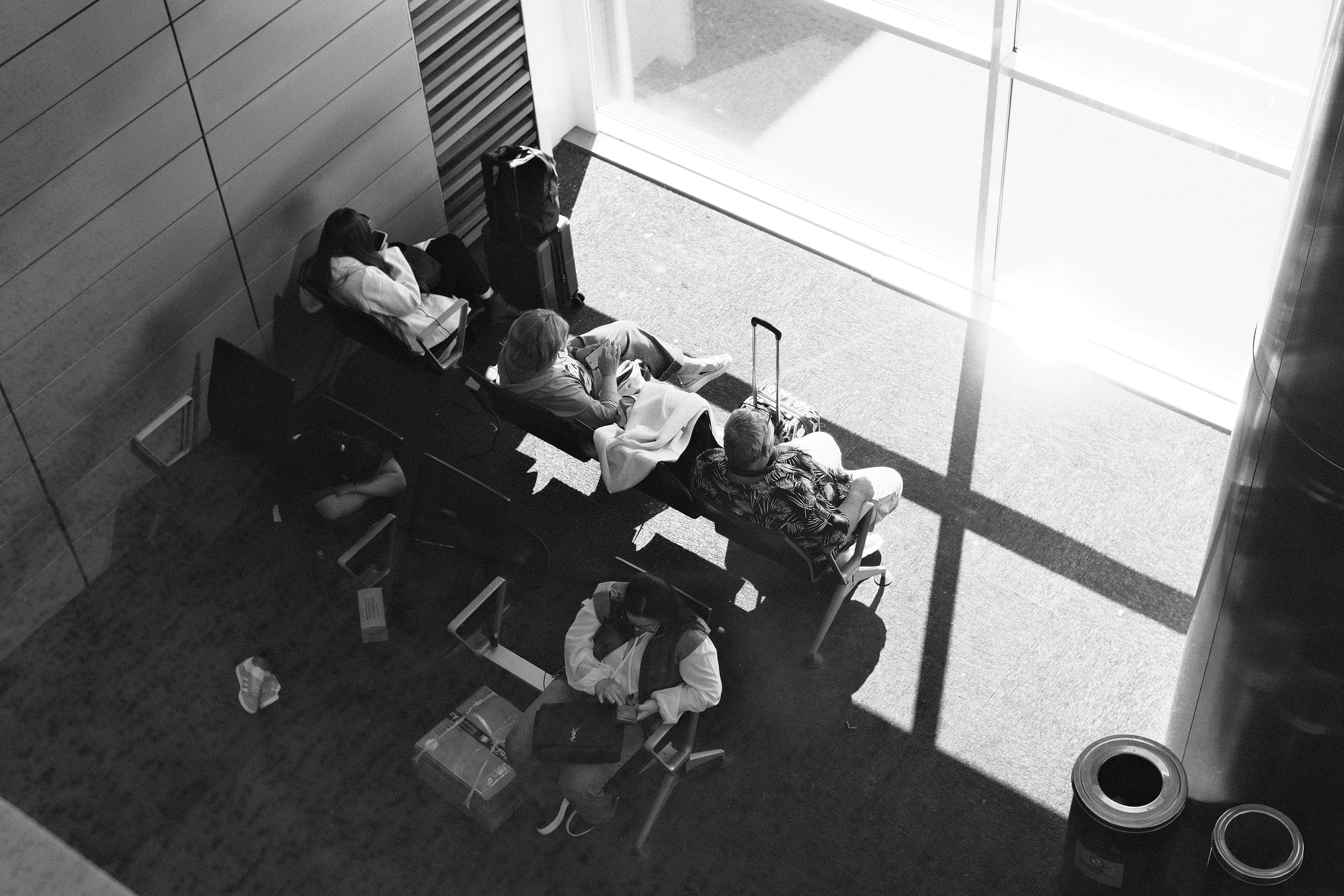
To reach São Luis we took a flight from Rio de Janeiro with a connection in Viracopos, in the state of São Paulo and where we waited long eight hours for our connection.

Viracopos Airport, Campinas - São Paulo.
Voigtländer NOKTON 35mm F1.2 @f/4
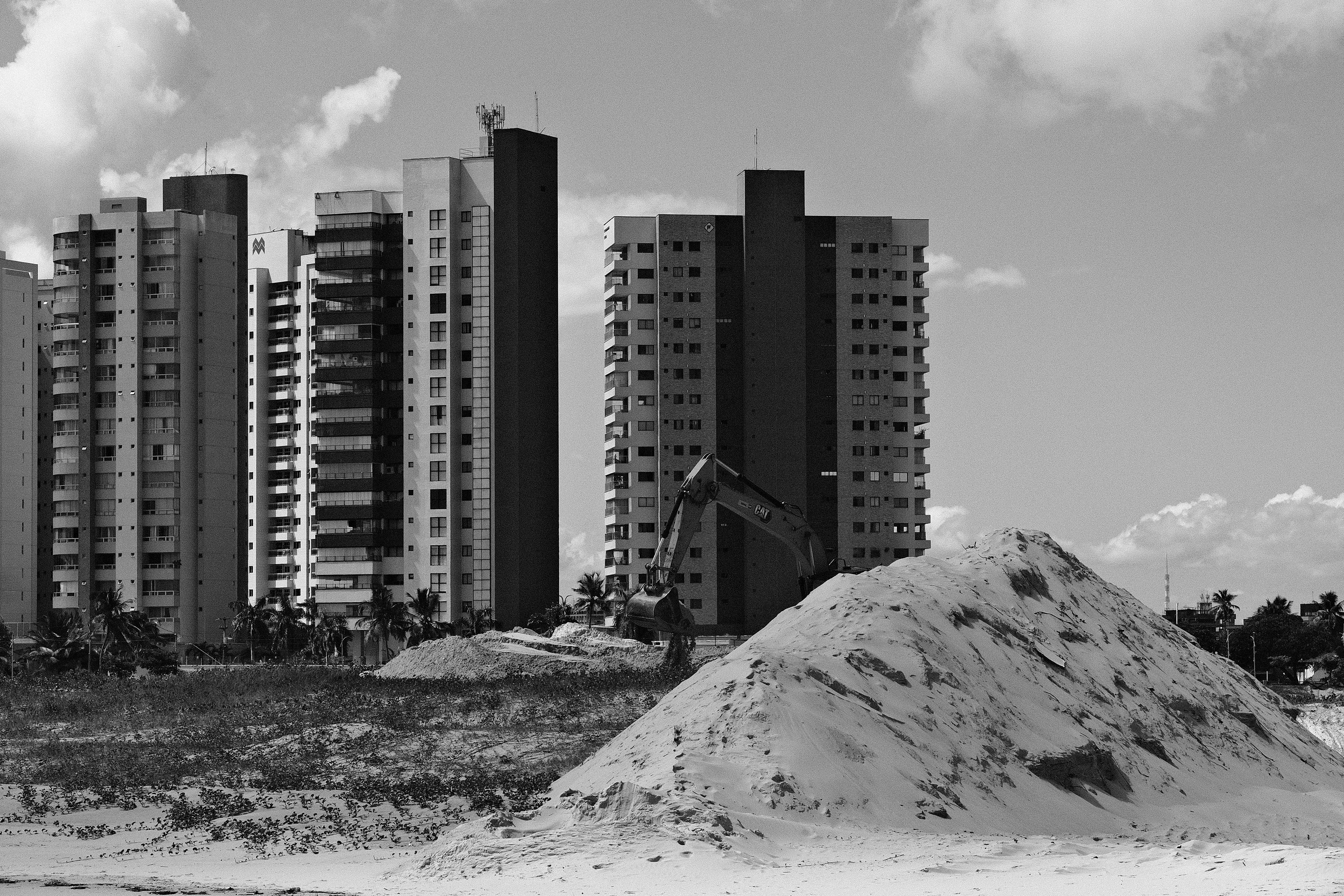
Our hotel was located at 'Ponta do Farol', in the northern part of the city and closer to the ocean rather than to the historical center. Albeit not as new as 'Ponta d'Areia' seen in the photograph below, both neighborhoods pretty much look the same; filled with tall buildings and wide boulevards.

Seafront in the Ponta d'Areia neighborhood.
Fujinon XF 50-140mm F2.8 R LM WR @f/8
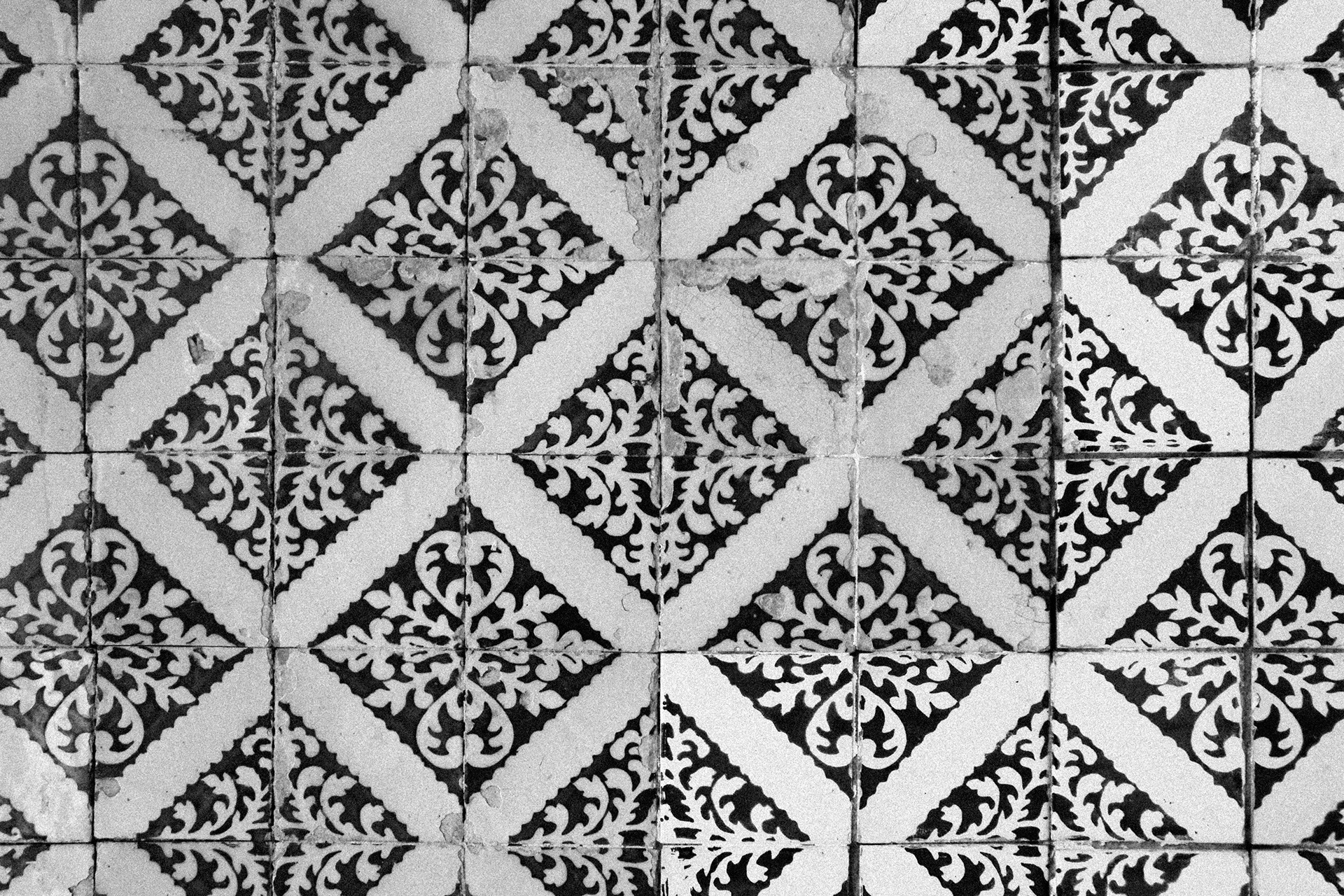
Portuguese tiles dating from the early 17th century.
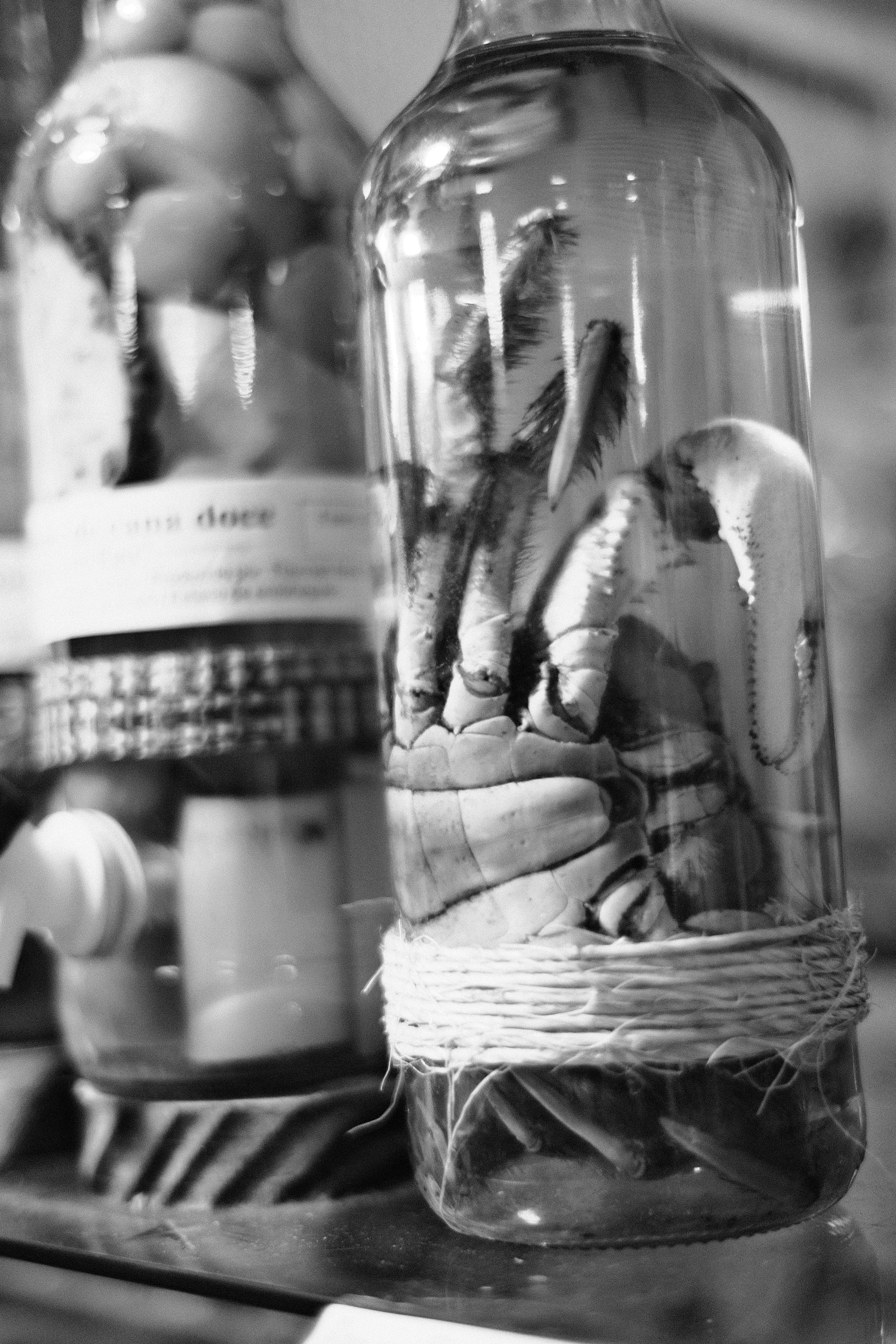
Traditional 'tiquira' liquor made from cassava.
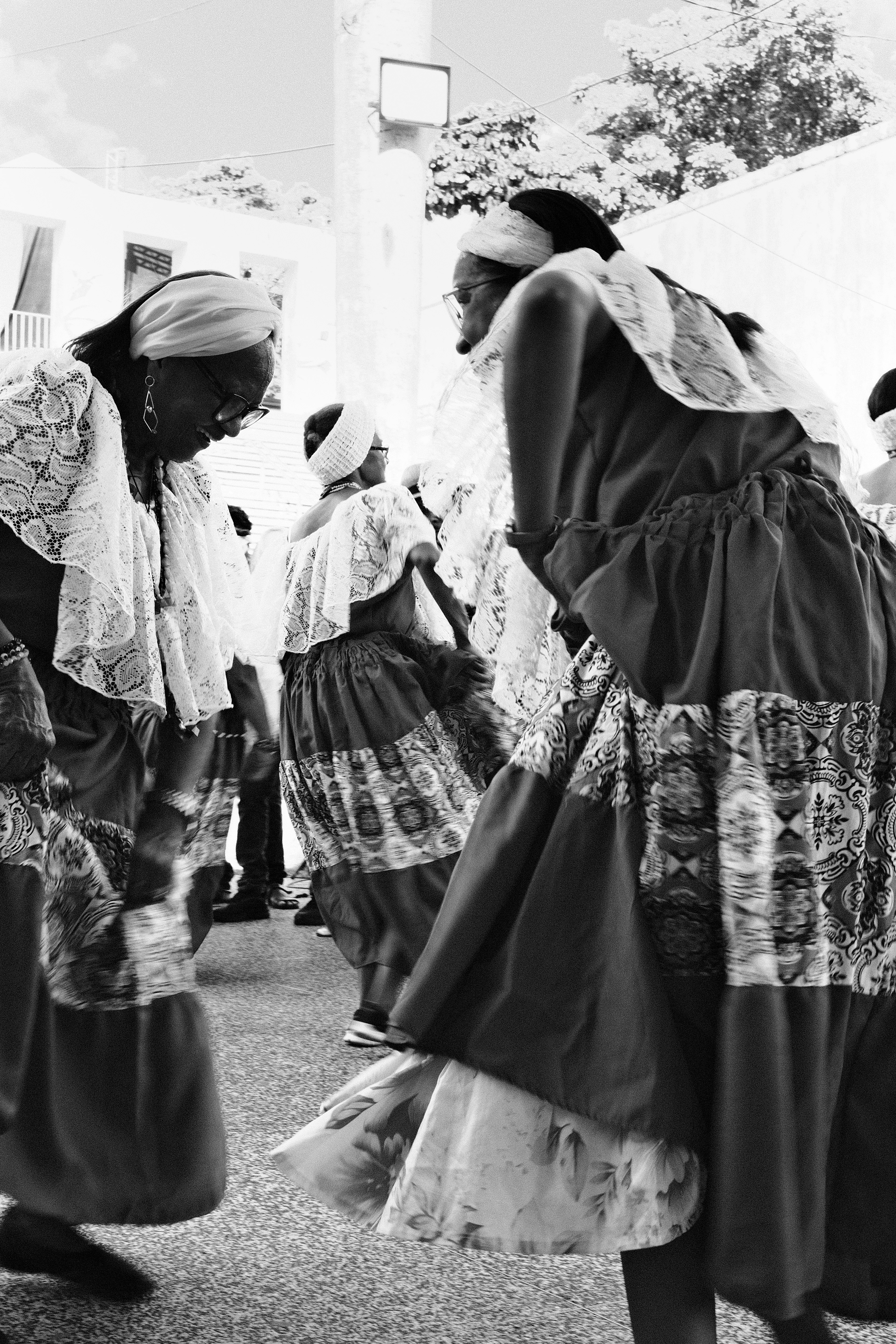
Women dancing in traditional clothes in the historical center of São Luis.
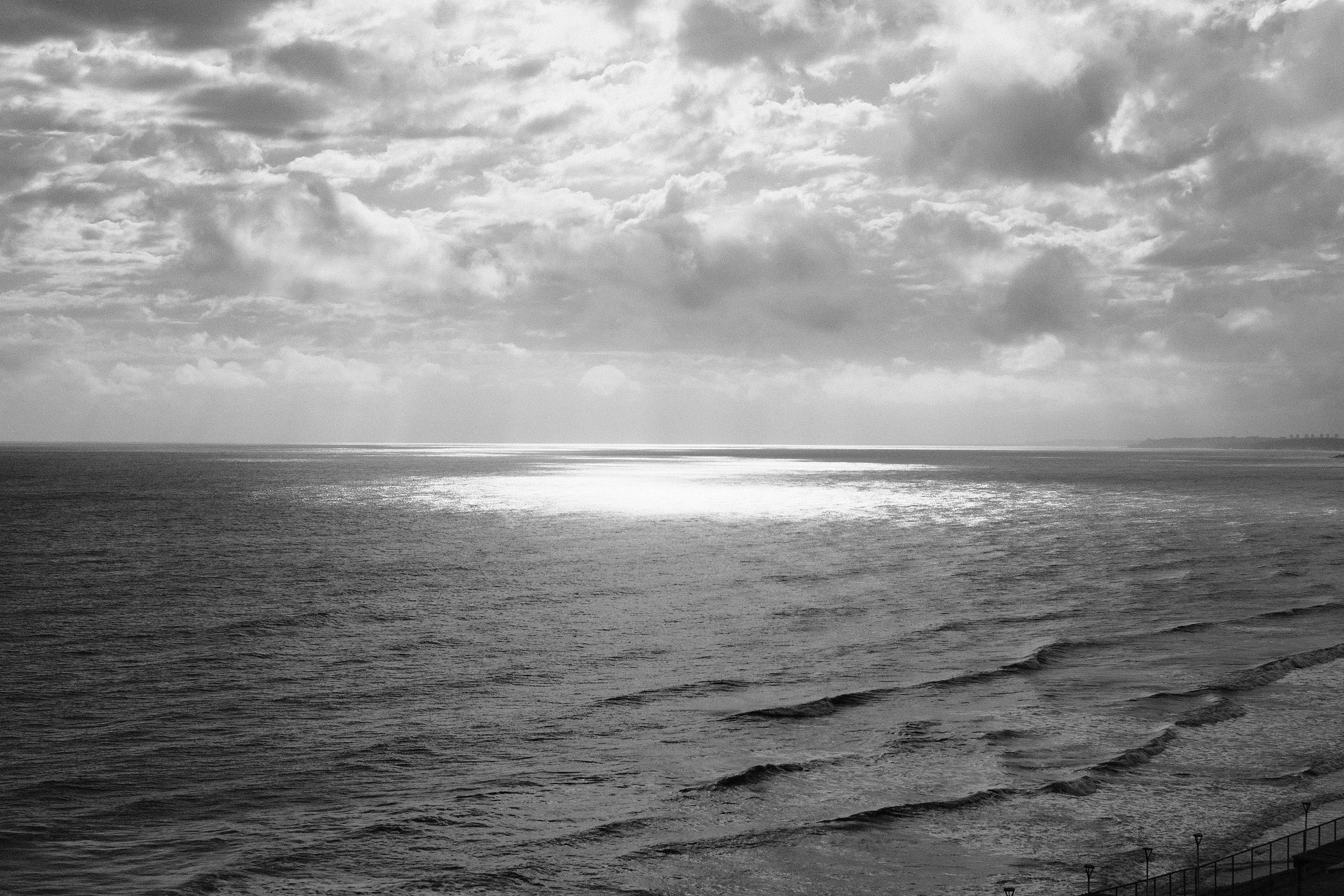
Ocean view from the hotel balcony.
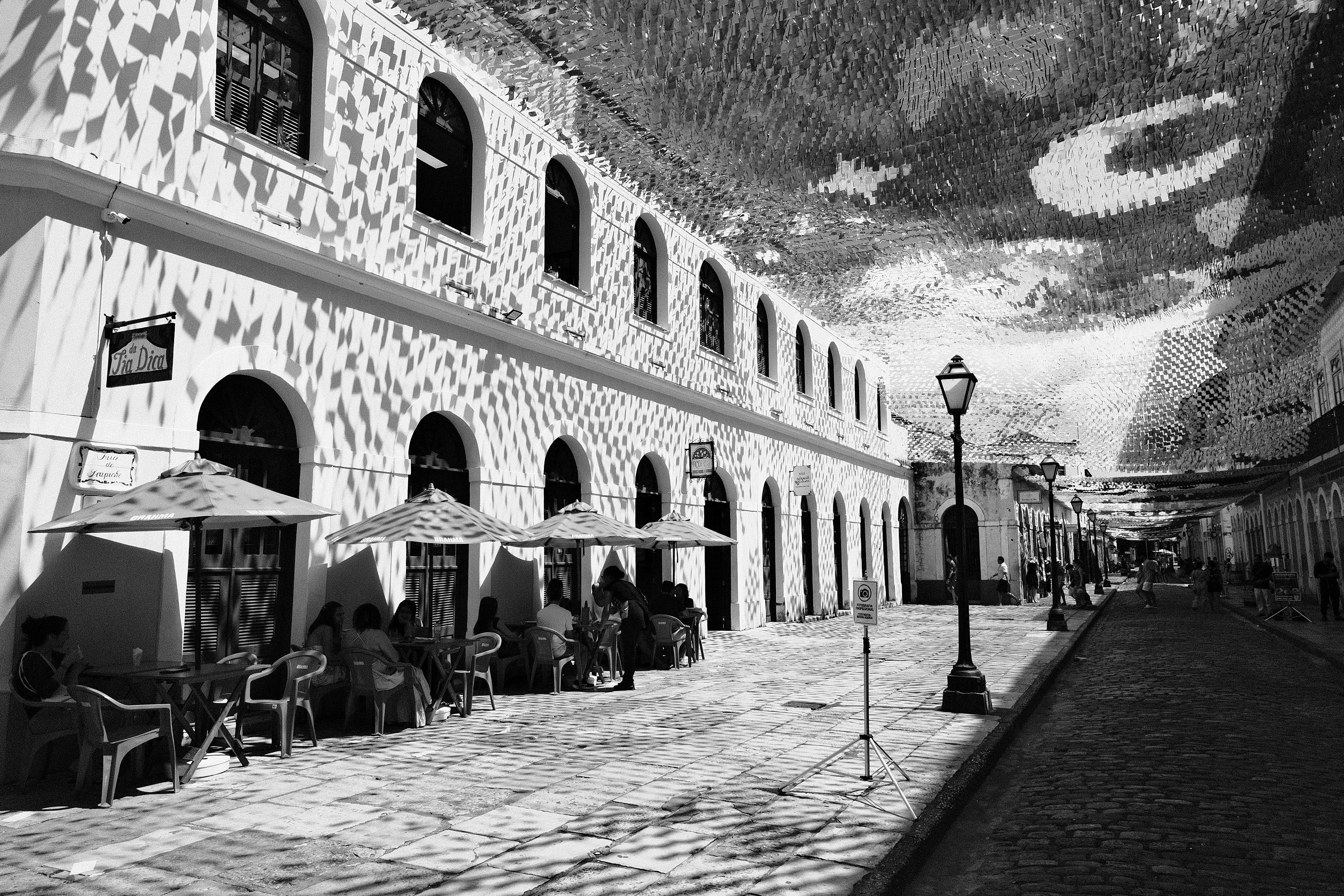

Historical center of São Luis.
Fujinon XF 16mm F2.8 R WR @f/8
The historical center is quite small. On our next day, Friday the 12th, they closed all entrances to the center due to the 'São João' festival. There were five stages scattered throughout the historical center where groups were performing the whole day. Traditional music, food and dances, all under a sky covered with paper flags (which casted a much welcomed shade to relive us from the heat)
— BARREIRINHAS & ATINS —

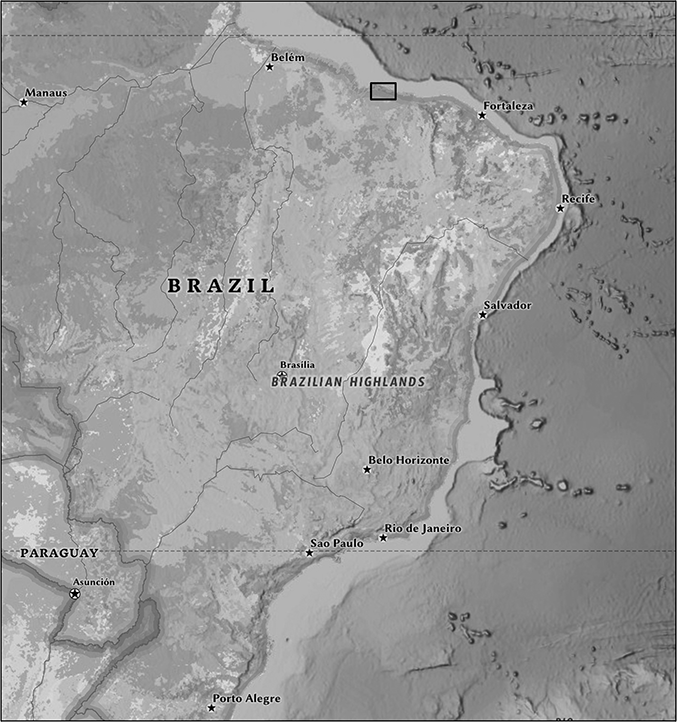
Map pinpointing the trip location (rectangle in the upper part).
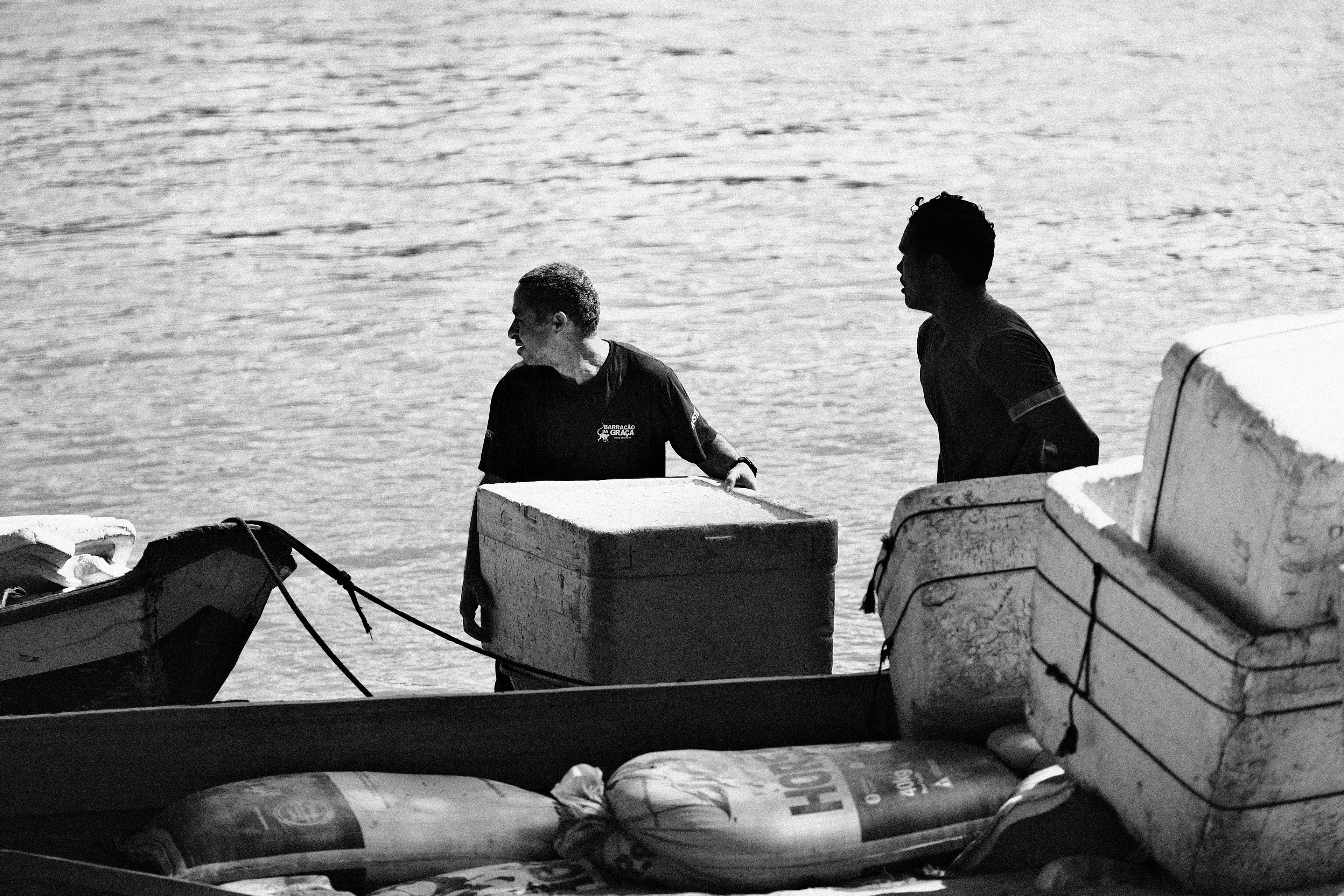
The 13th we departed towards Barreirinhas (a small town east of São Luis) from where we caught our ferry towards the Atins village — our final destination and where we passed the remaining days of our trip. The drive took us around four hours plus a 30-min lunch break along the way. The boat ride usually takes about one hour and a half, but we stopped several times on our way to sightsee and reached Atins only late in the evening after the sunset.

Local workers unloading cargo from a small boat.
Fujinon XF 50-140mm F2.8 R LM WR @f/2.8
Boat starboard side.
Voigtländer NOKTON 35mm F1.2 @f/5.6
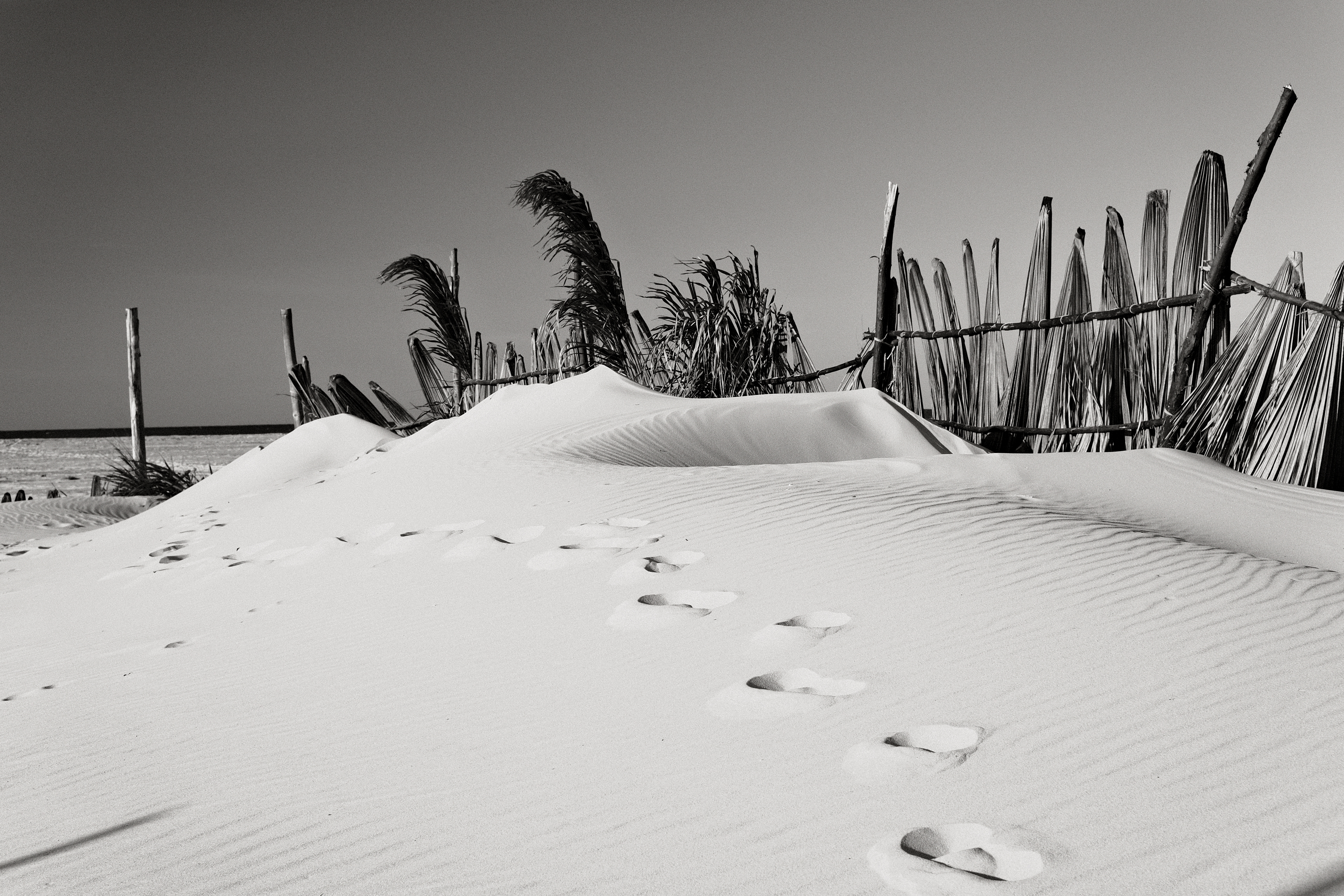
Sand dunes and improvised wooden fences. The sea is seen far in the background.
Voigtländer NOKTON 35mm F1.2 @f/8
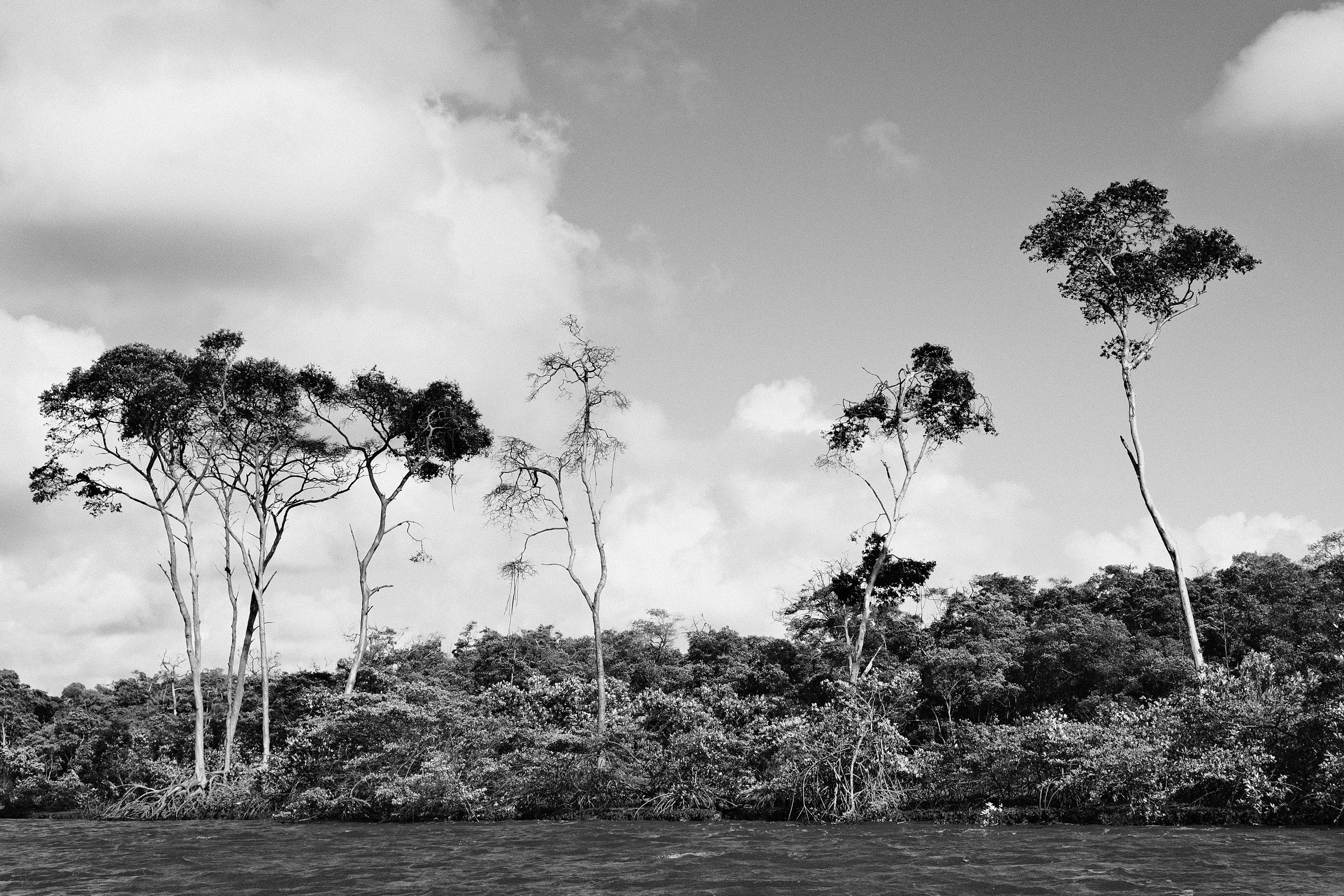
I was fascinated with the landscape. It is so unique, I wanted to photograph everything. Special attention is given to the mangrove and trees spreading along the river banks, giving birth to these unparalleled landscapes, with sand dunes in the horizon mixed together with mangrove, dark water, and tropical forest vibes.

'Preguiça' river banks.
Voigtländer NOKTON 35mm F1.2 @f/5.6
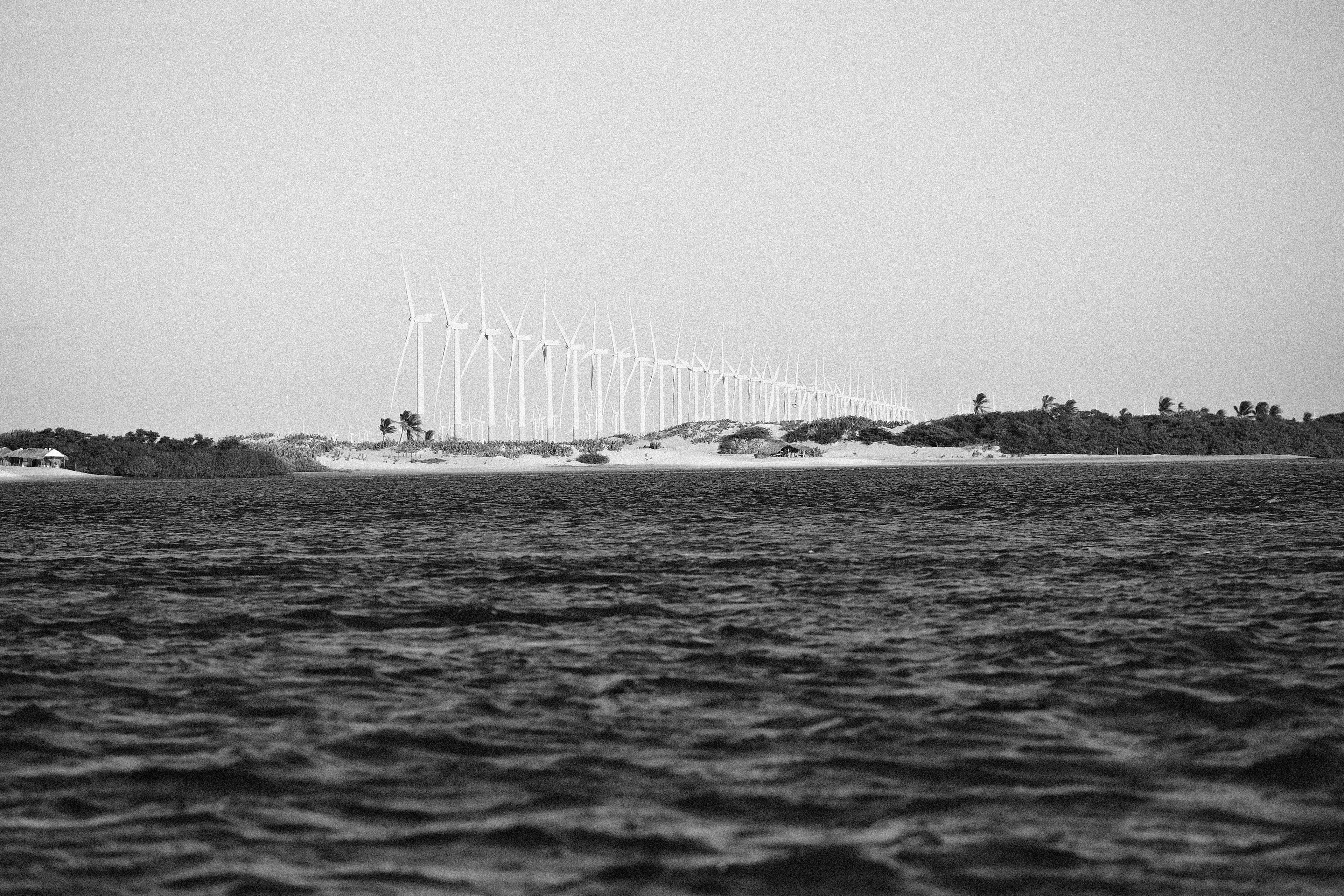
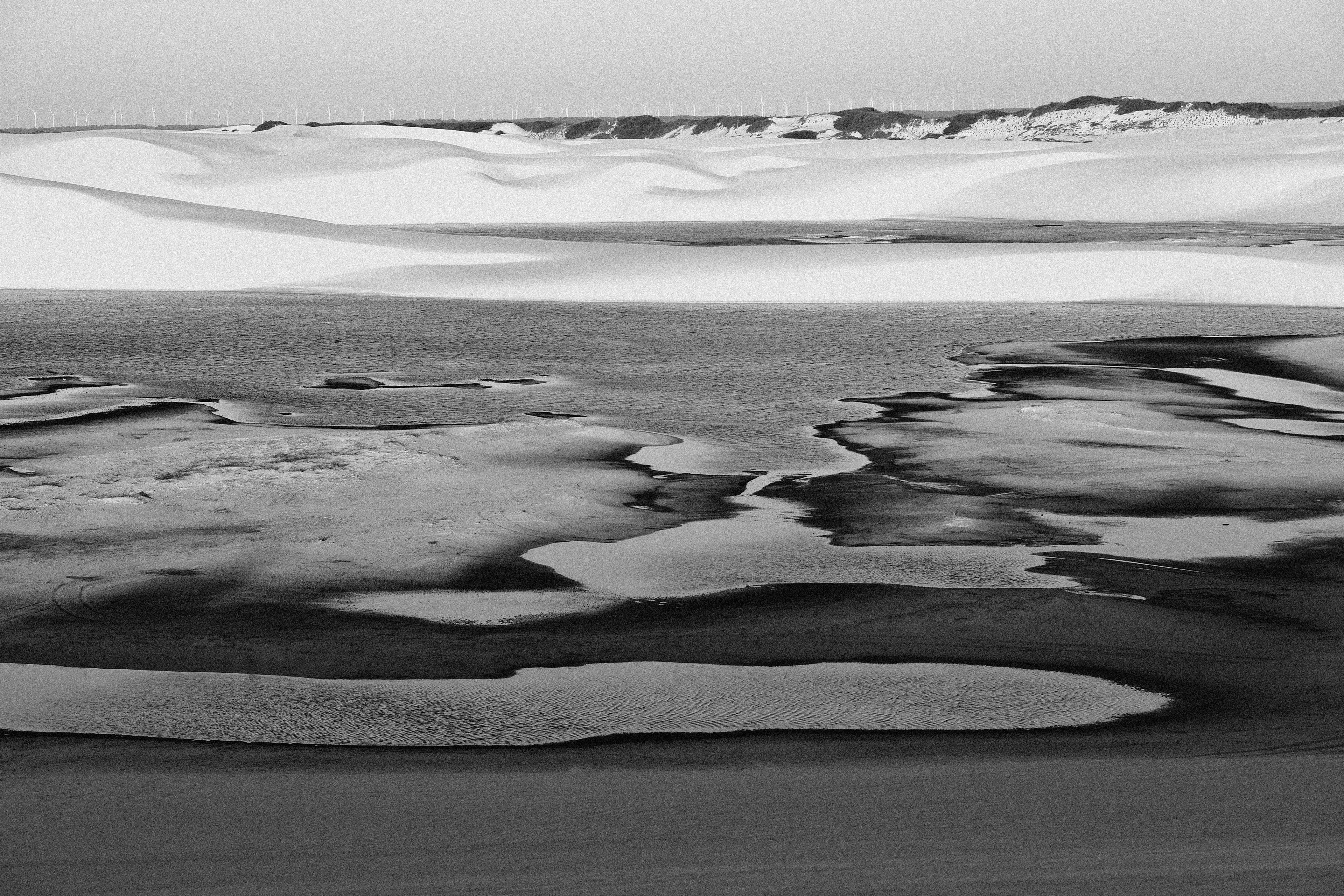
Renewable energy farm seen in what is called the 'small lençóis'.
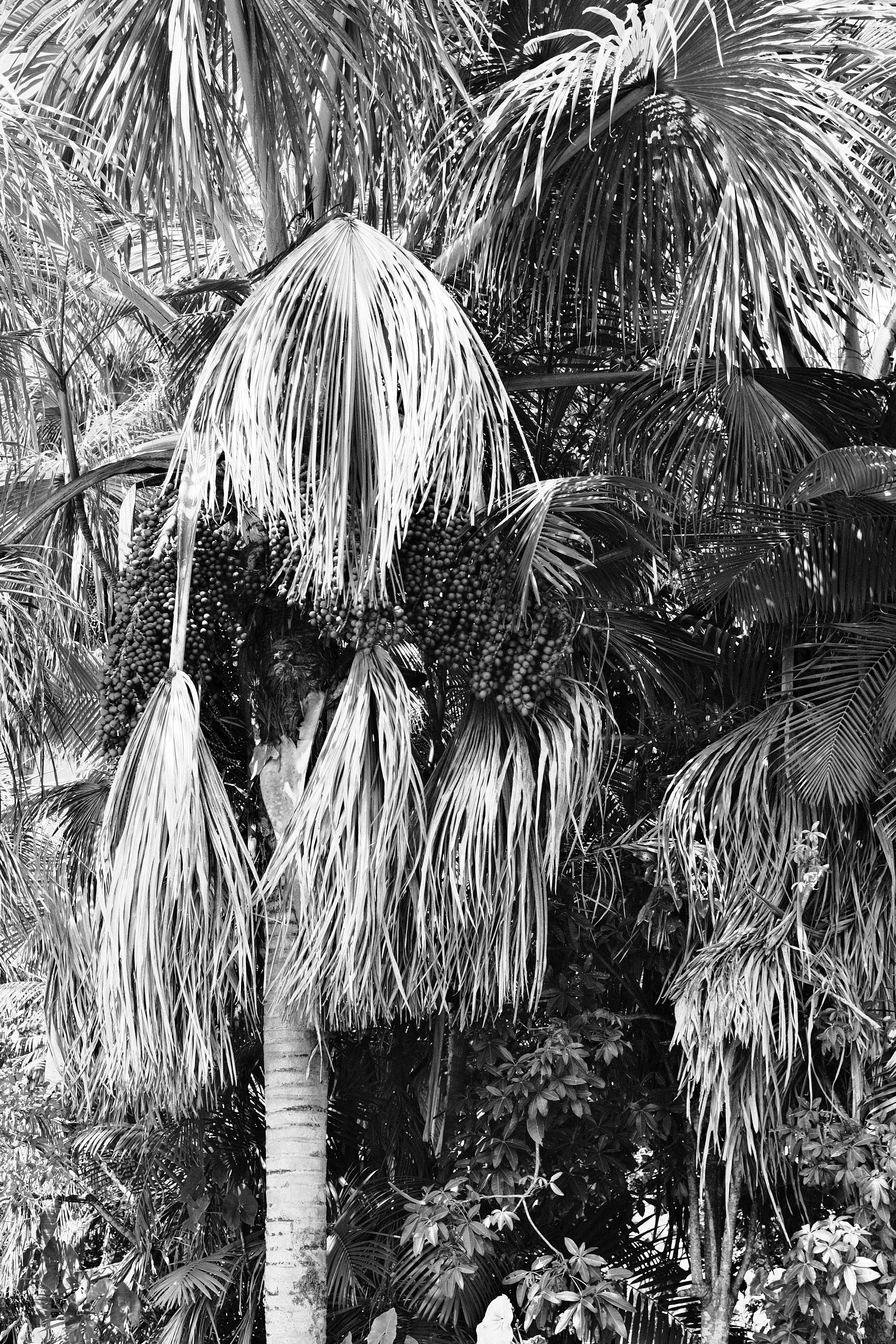
Typical 'buriti' fruit tree.
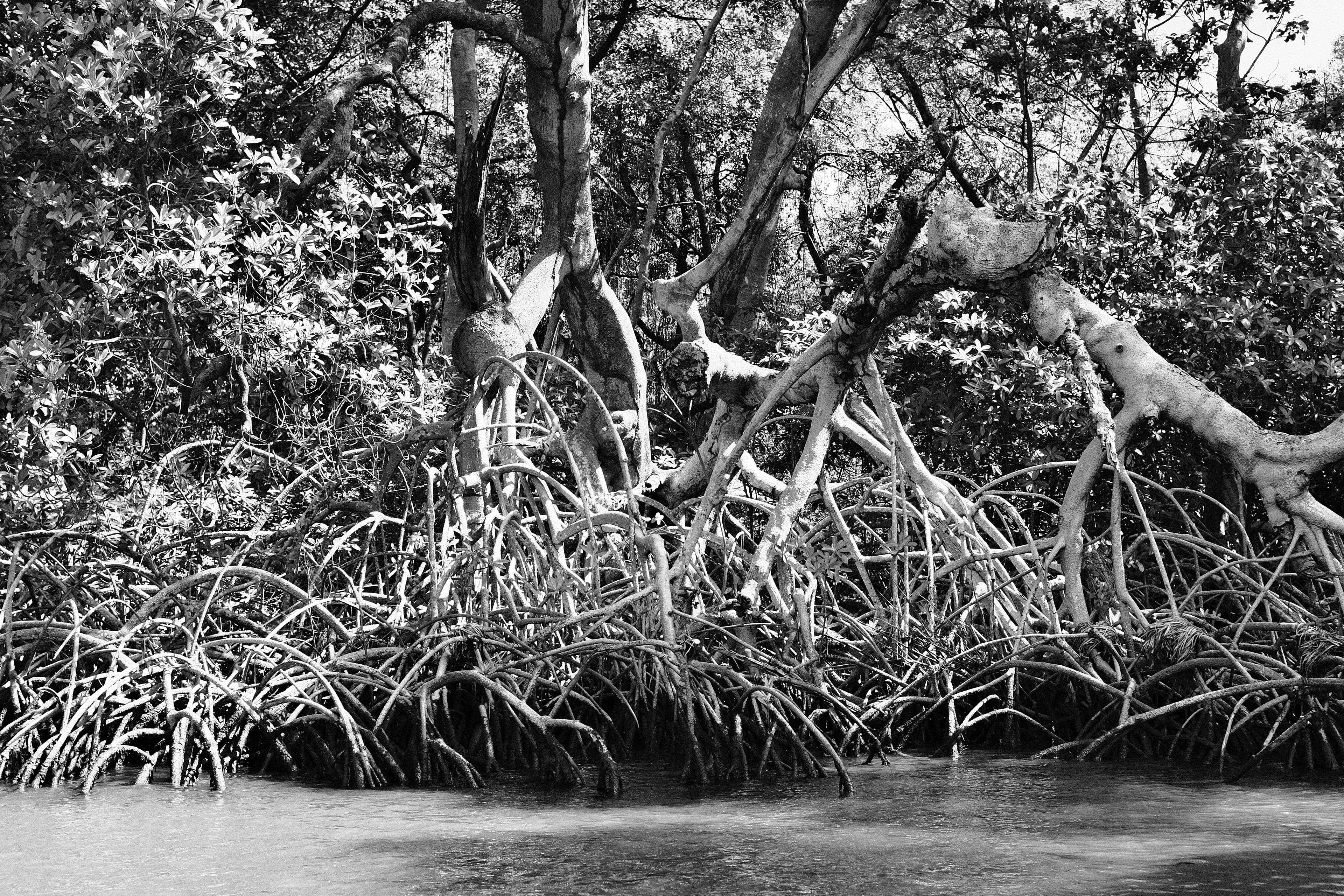
Mangrove at the 'Pregiça' river on low tide.
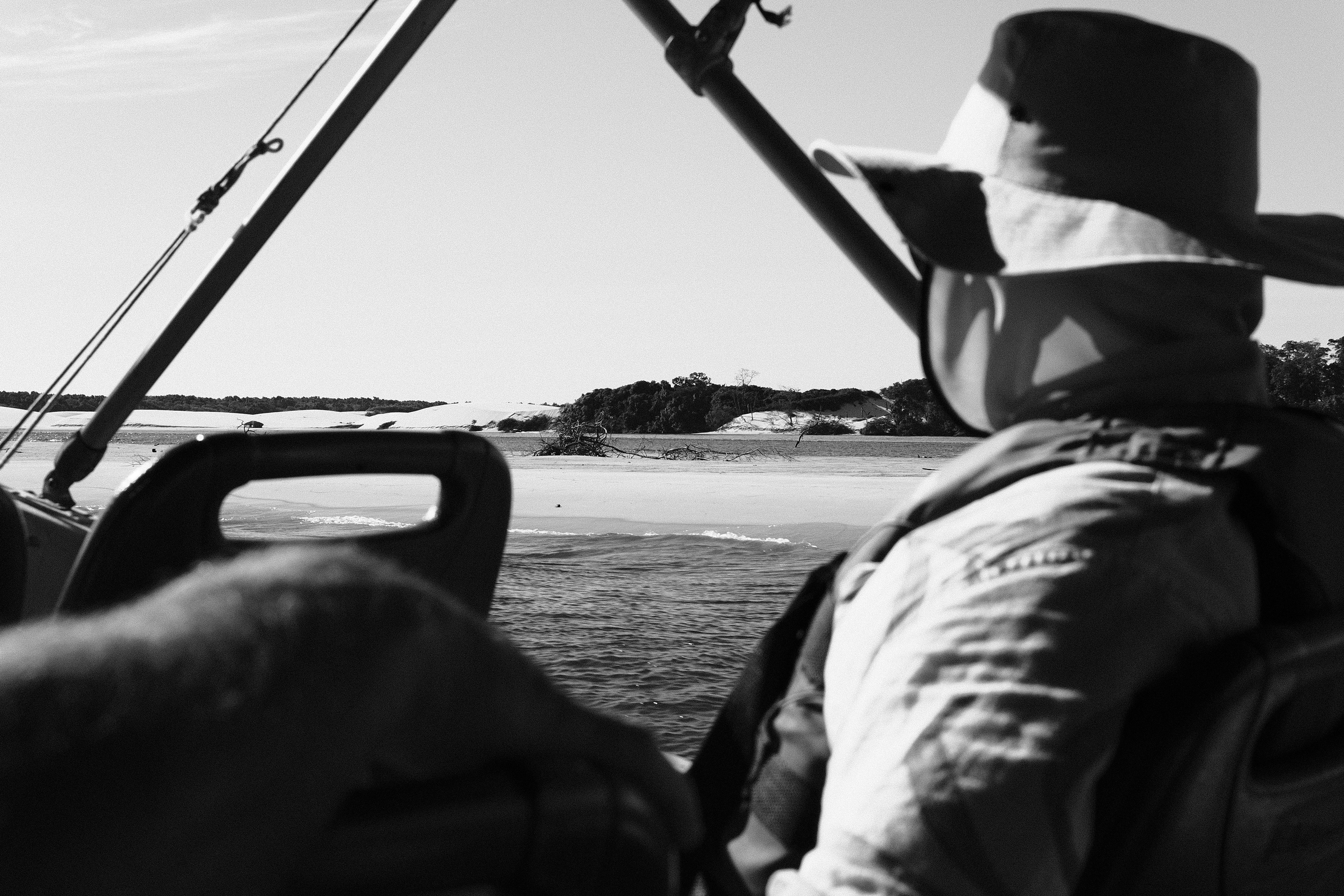
View from the boat.
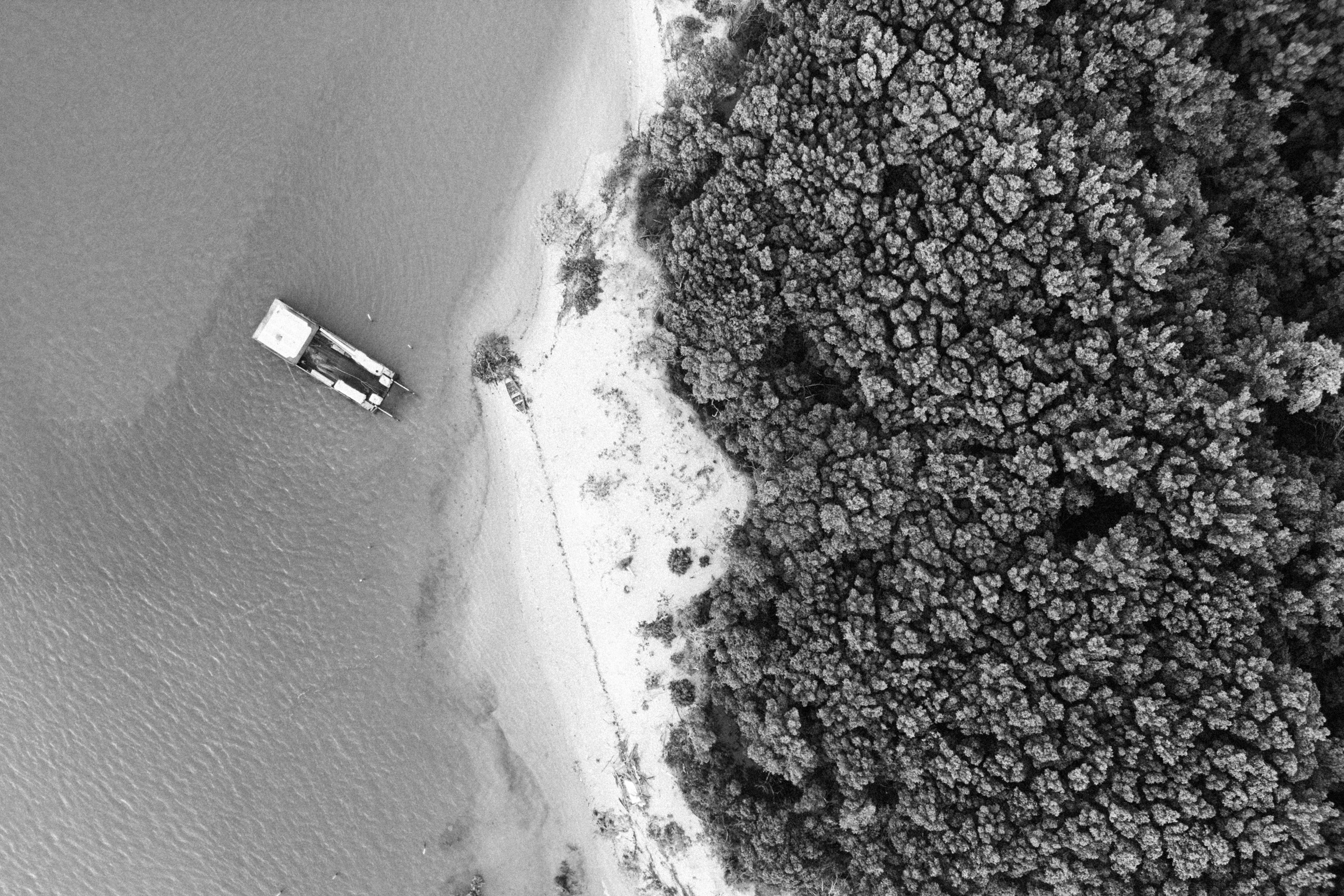
View from the boat.

Aerial view of the Atins shore next to the port.
DJI Mini 3 Pro
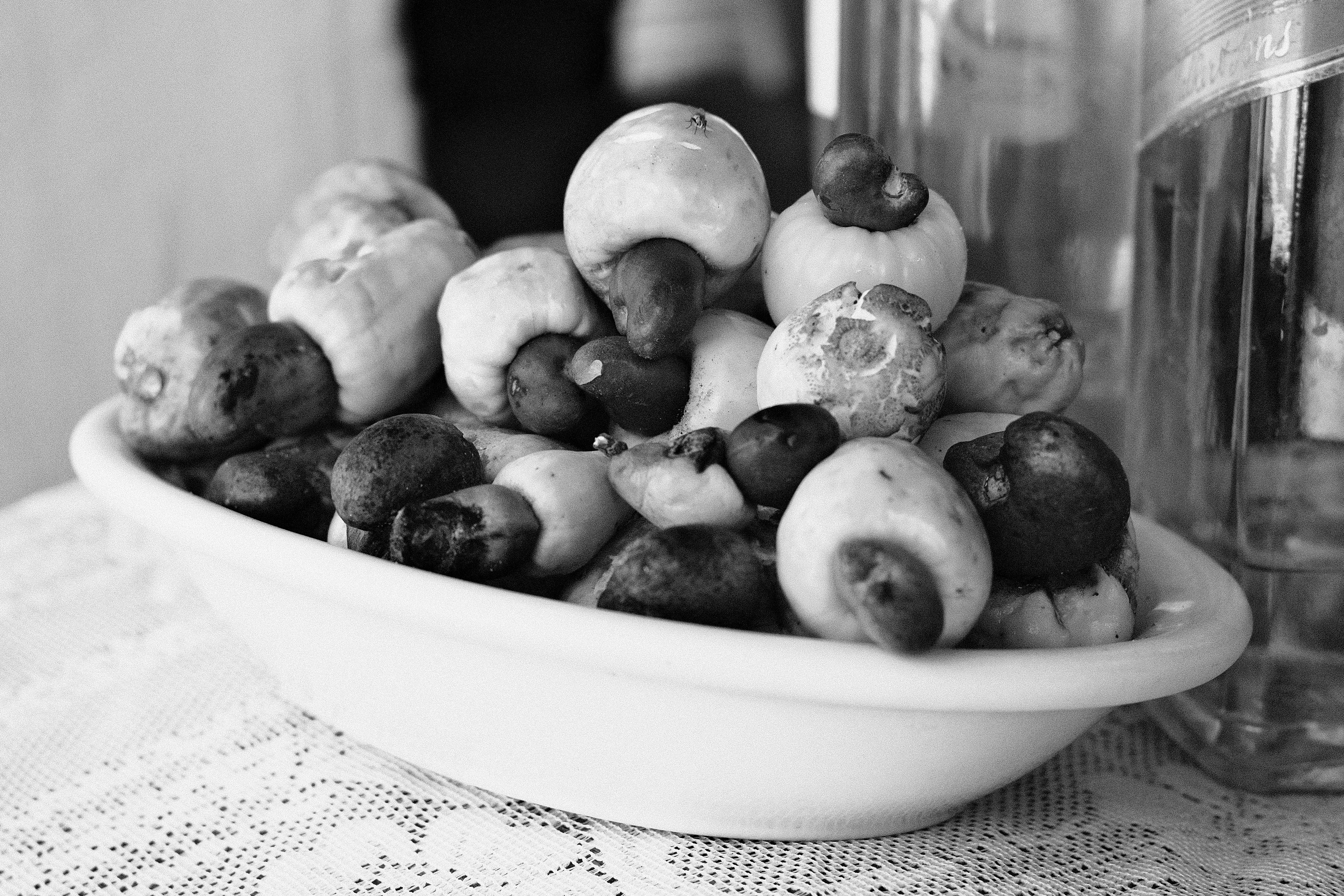
Cajú, the fruit from where cashews are extracted.
Voigtländer NOKTON 35mm F1.2 @f/4
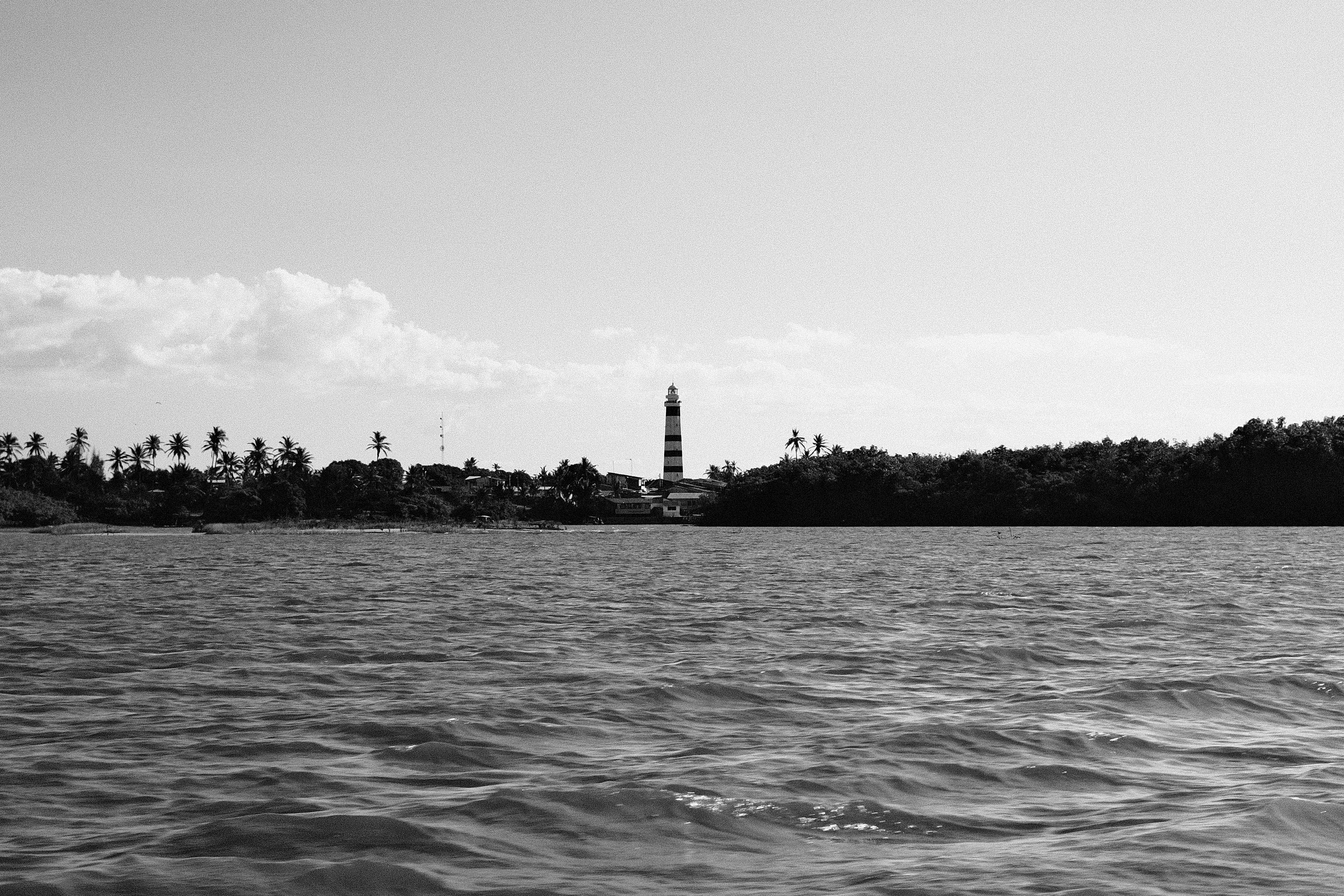
Mandacarú lighthouse.
Voigtländer NOKTON 35mm F1.2 @f/8
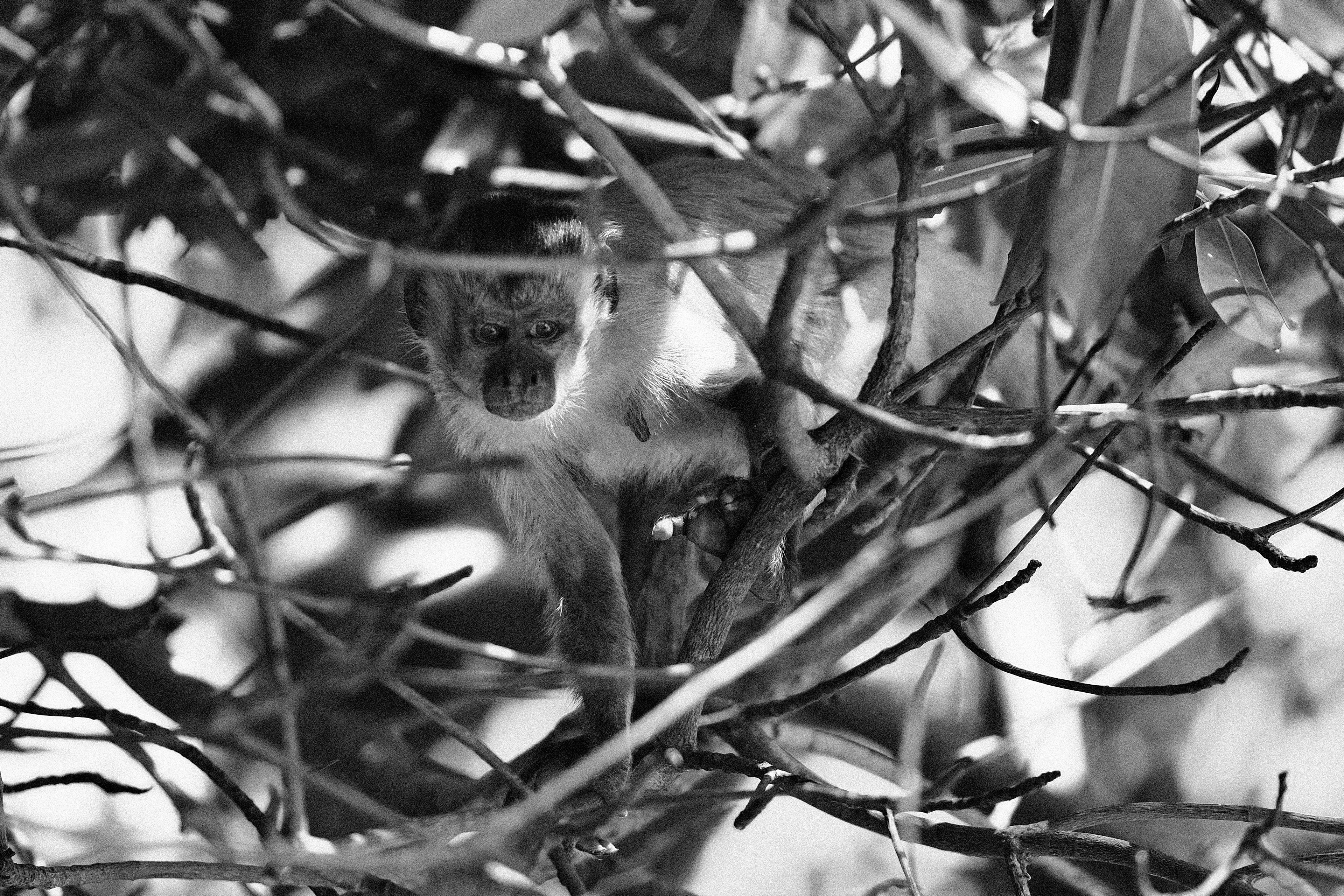
The boat trip took us to 'Mandacarú', where you can shop for some local products and produce as well as visit the lighthouse of same name which is under the Navy custody. We have also stopped at 'Vassouras' for lunch and 'Caburé'. We ended the trip with the sunset and a wonderful sight of the 'Guará' birds that come back from the sea at the end of the day.

Monkey at Vassouras.
Fujinon XF 50-140mm F2.8 R LM WR @f/2.8
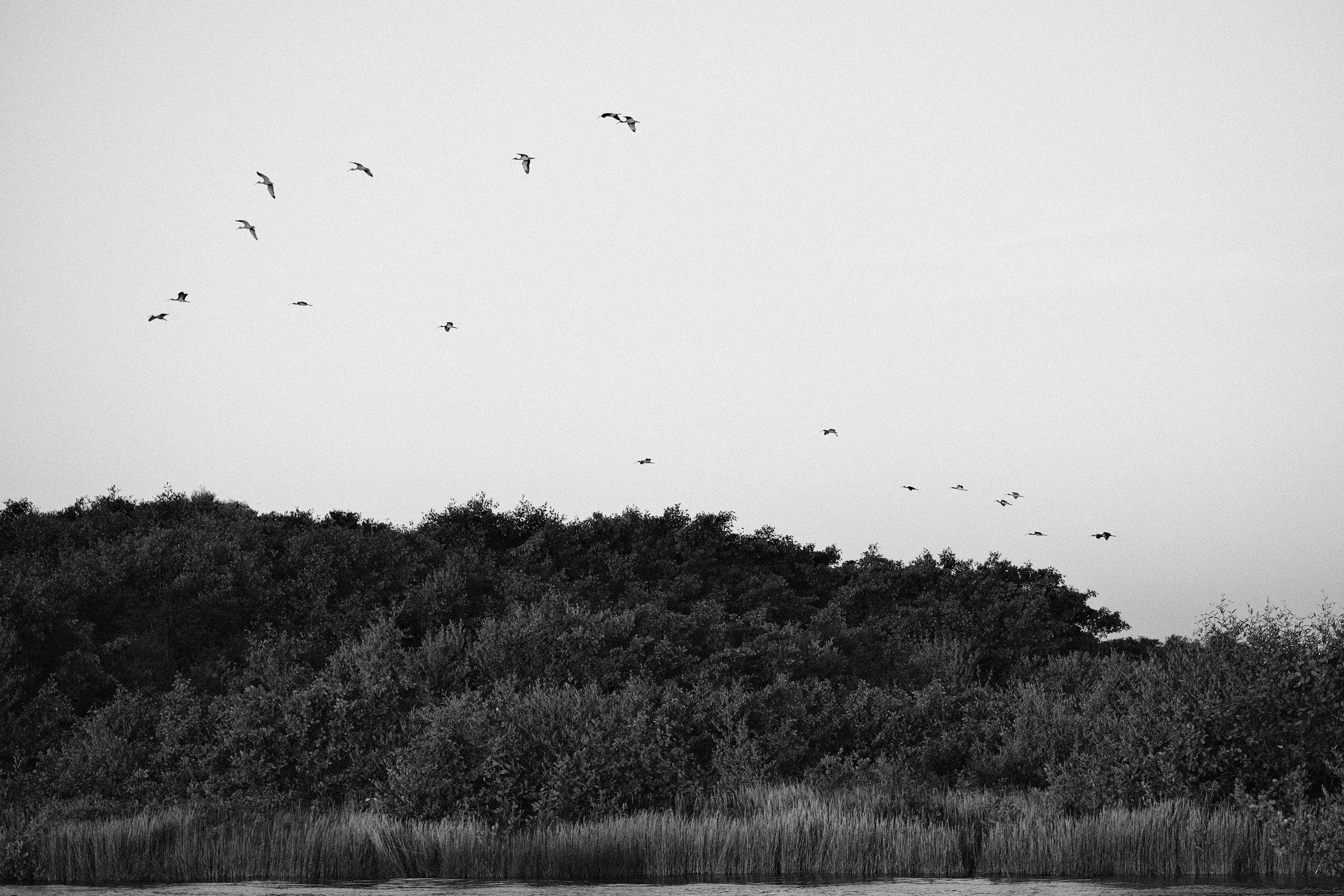
Guará birds flying to their nests in the river banks.
Fujinon XF 50-140mm F2.8 R LM WR @f/2.8
— The National Park —
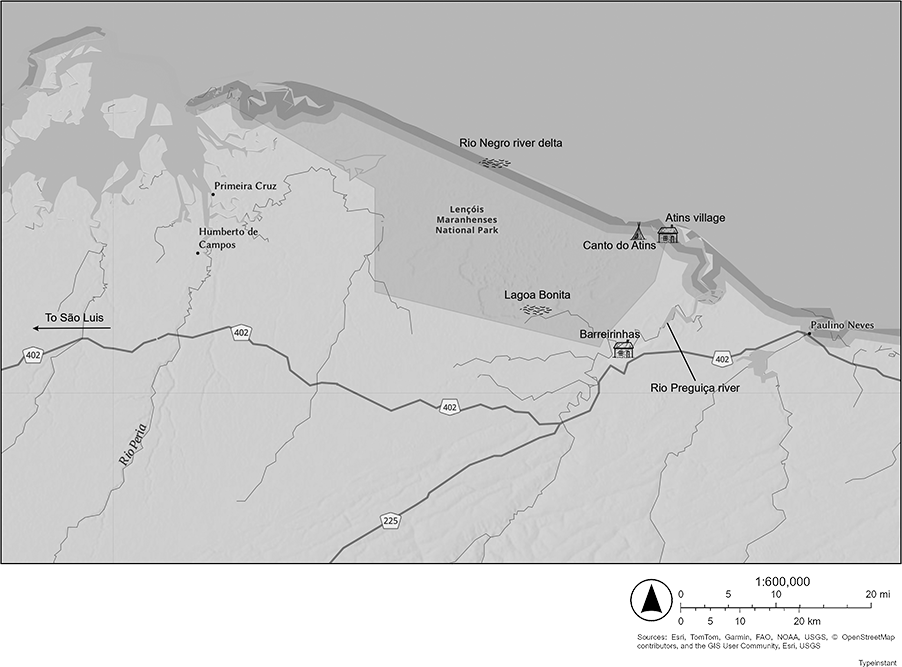
Our next day was packed with activities. We would finally visit the National Park and its wonderful lagoons. To reach the first couple lagoons — Lagoa Bonita and Lagoa Azul — we had to drive for about one hour and a half from Atins onboard an adapted 4x4 vehicle they call 'Jardineira', which are made exclusively for the Park. We stopped halfway at a restaurant to make our reservation for lunch and pre-order the food.

Map of the National Park and reference points.
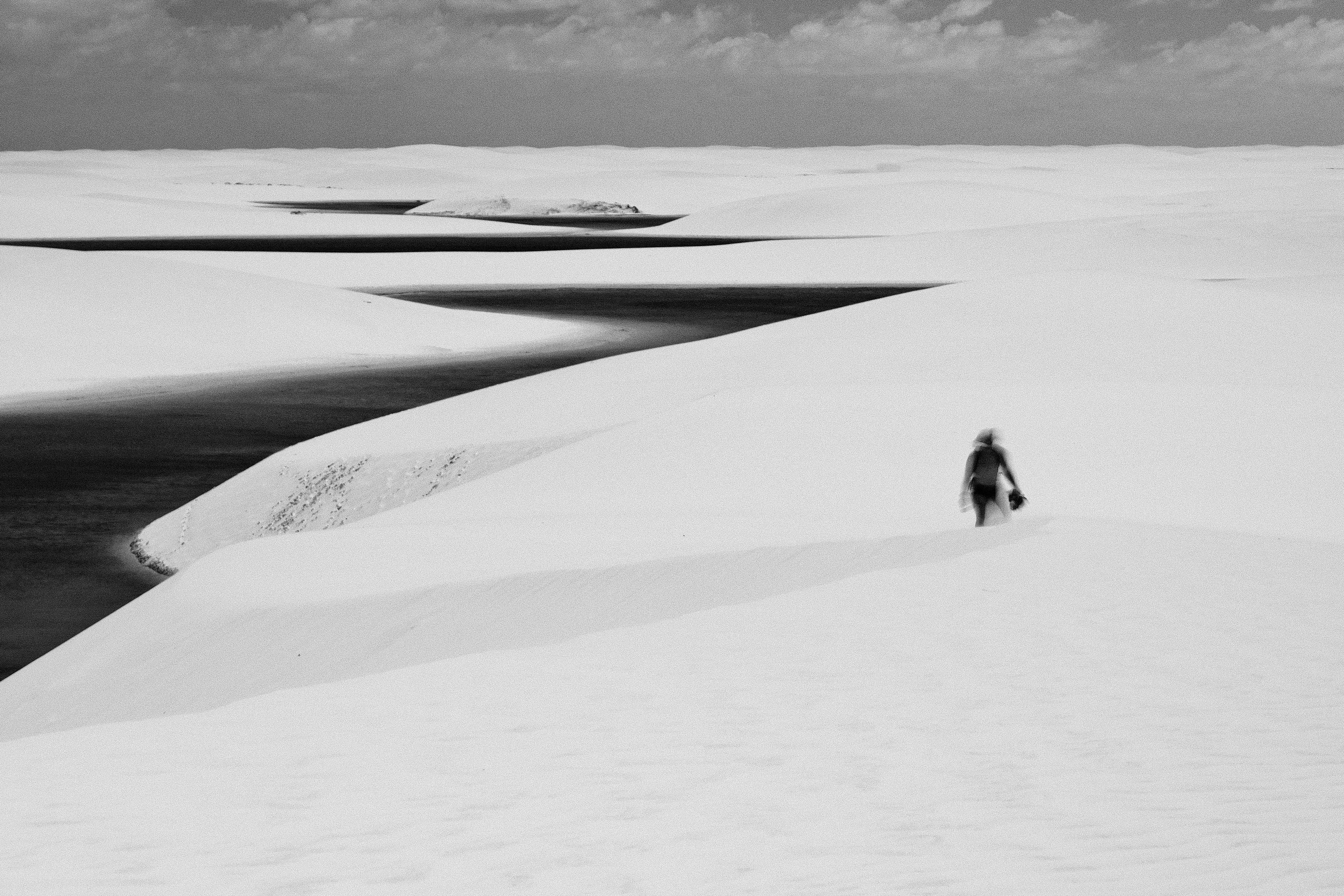
View from top of 'Lagoa Bonita' — long exposure.
Fujinon XF 50-140mm F2.8 R LM WR @f/8
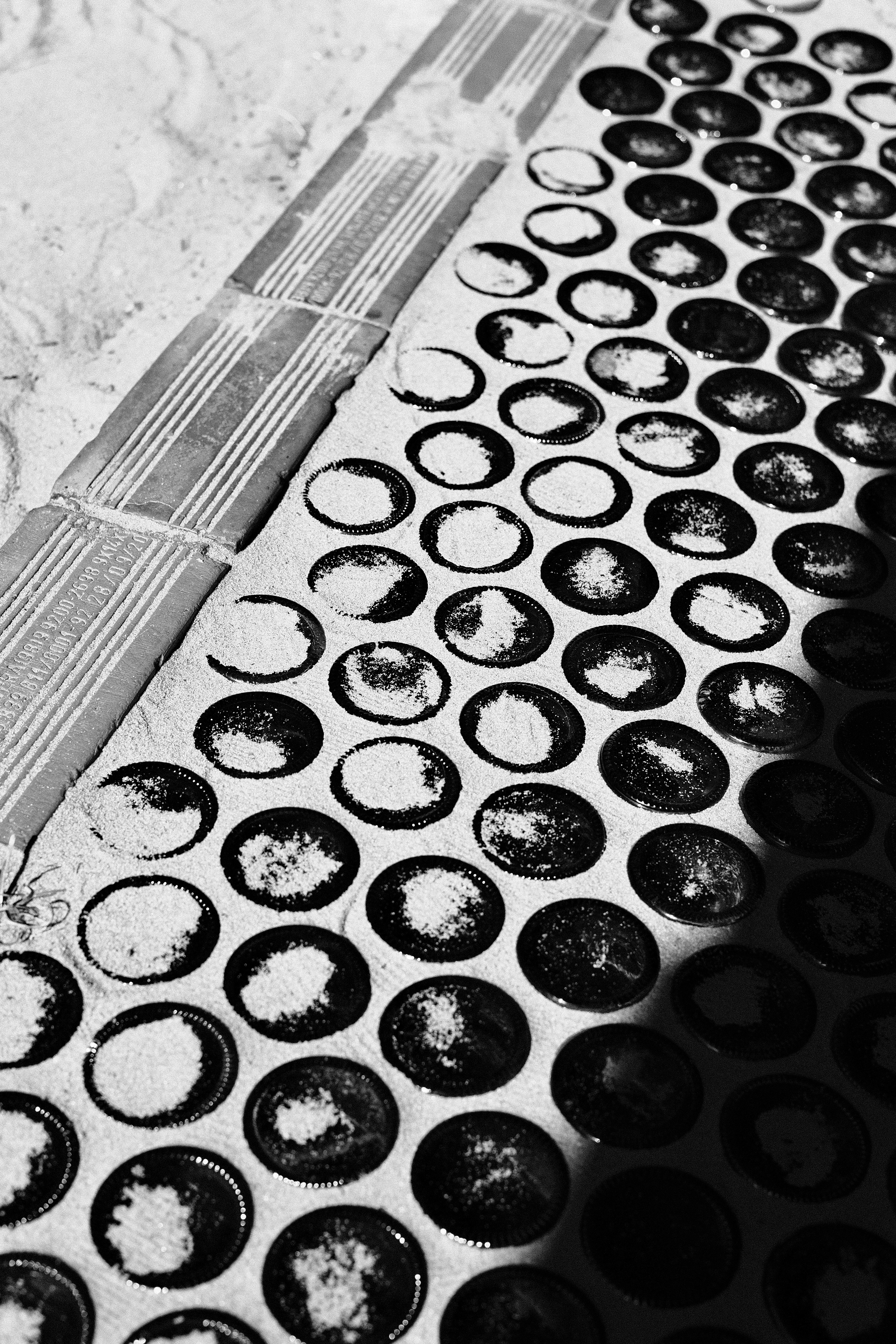
'Da Regiane' restaurant — floor detail.
Voigtländer NOKTON 35mm F1.2 @f/4
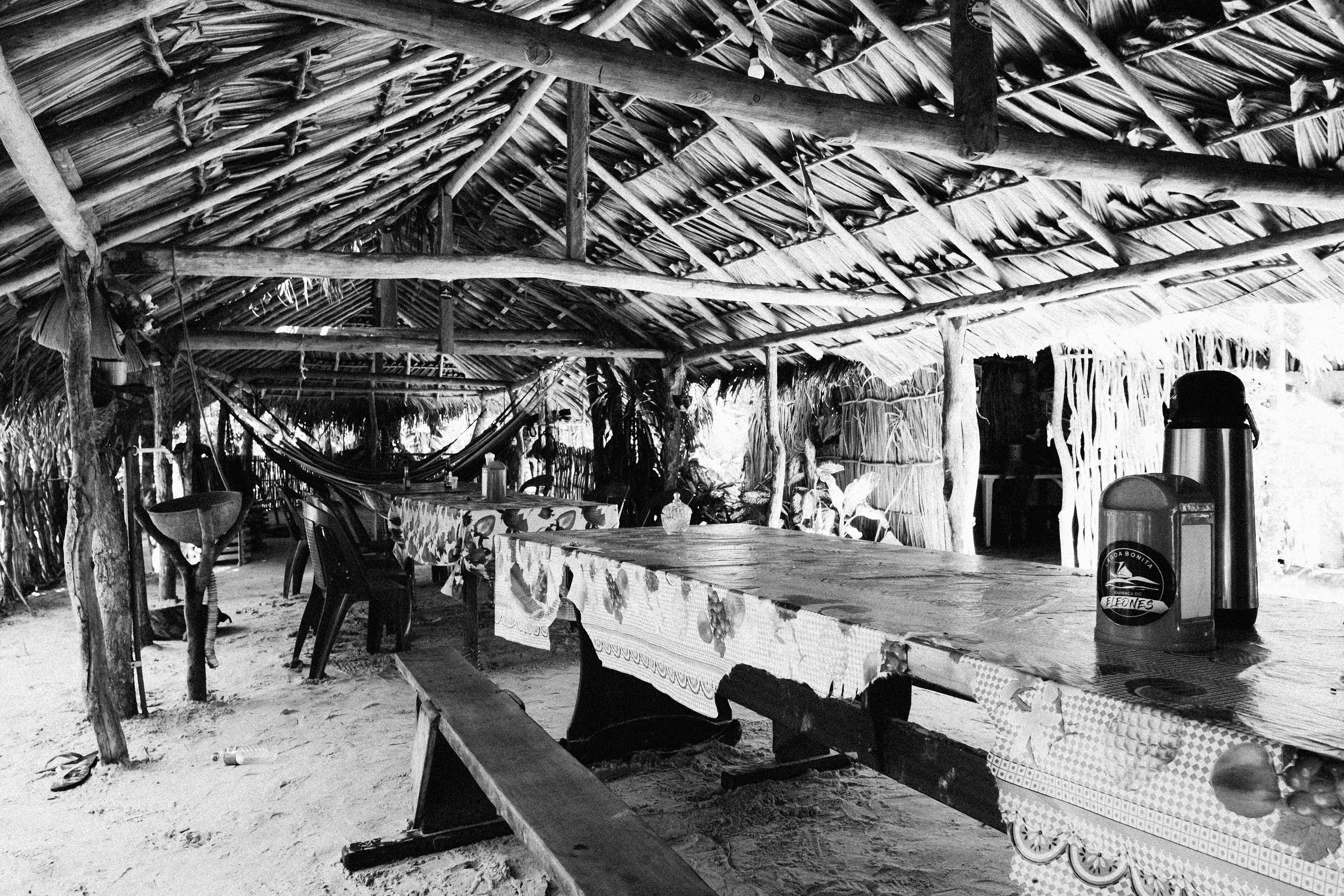
Local shop near 'Lagoa Bonita'.
Fujinon XF 16mm F2.8 R WR @f/5.6
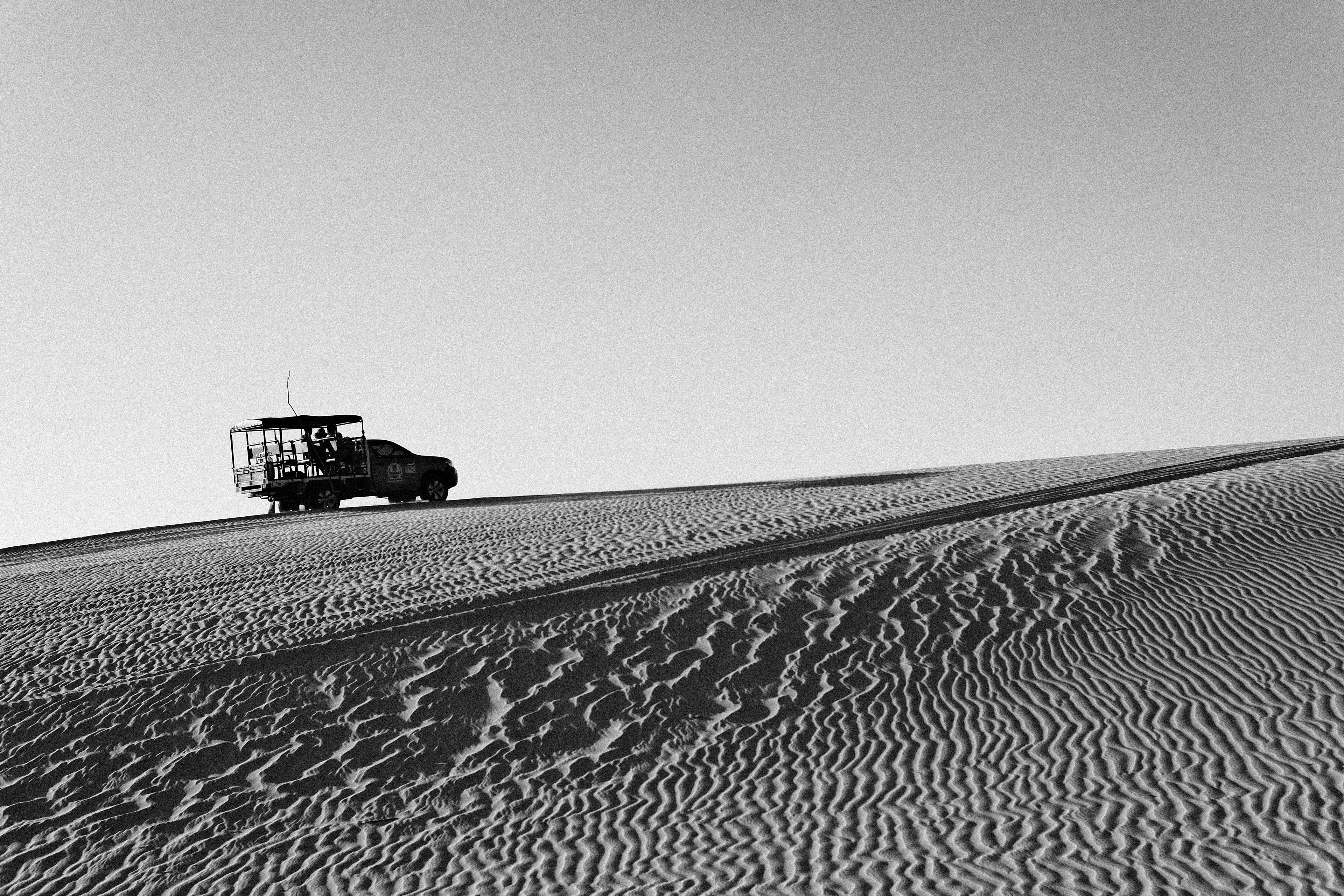
The dunes are quite harsh on the cars, as you have not only sand but some vegetation along a few routes and lots of brackish water as well. On each car, there must be one driver and one guide, just as you see in Rally competitions.

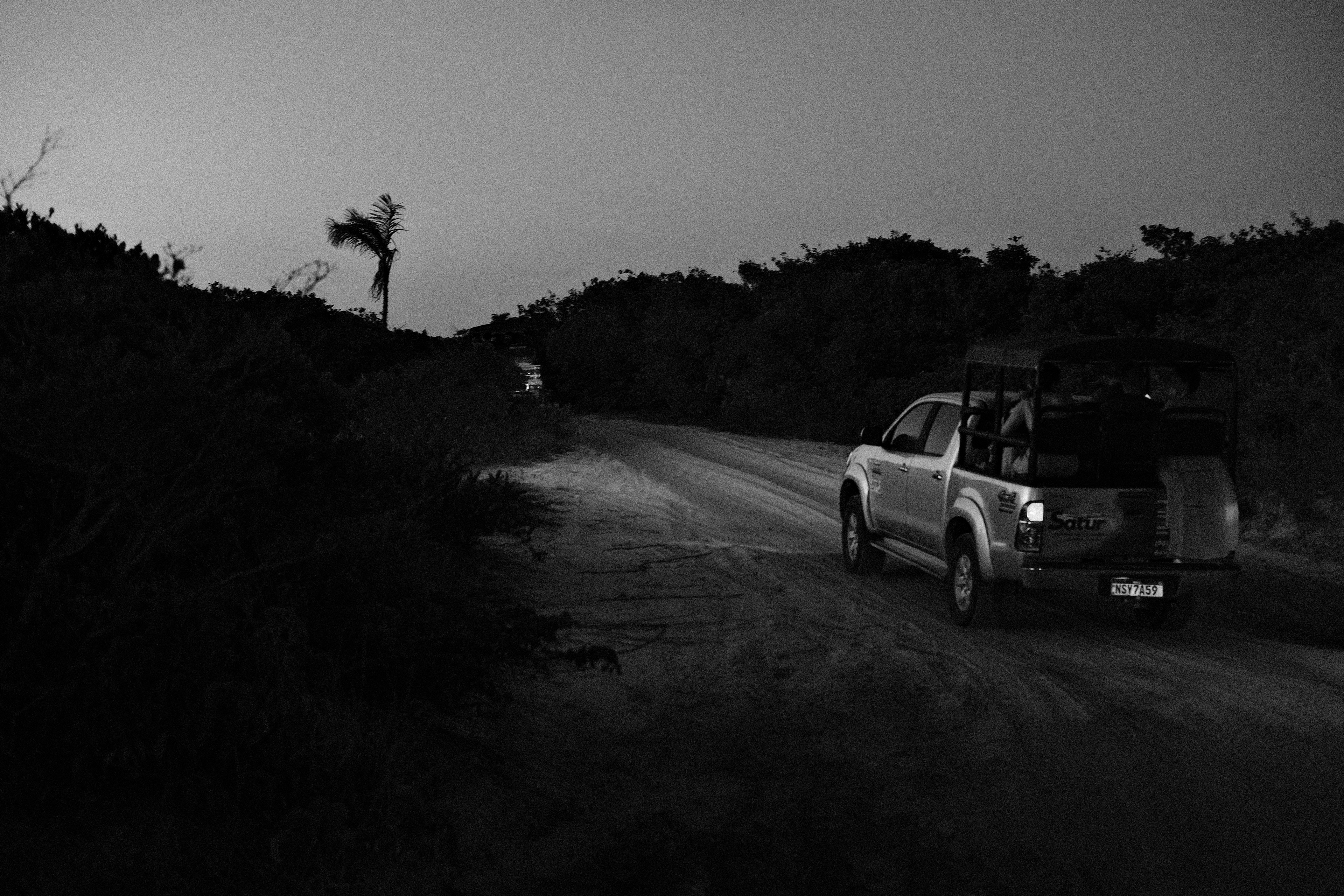
A 'Jardineira' 4x4 vehicle.
Voigtländer NOKTON 35mm F1.2 @f/5.6
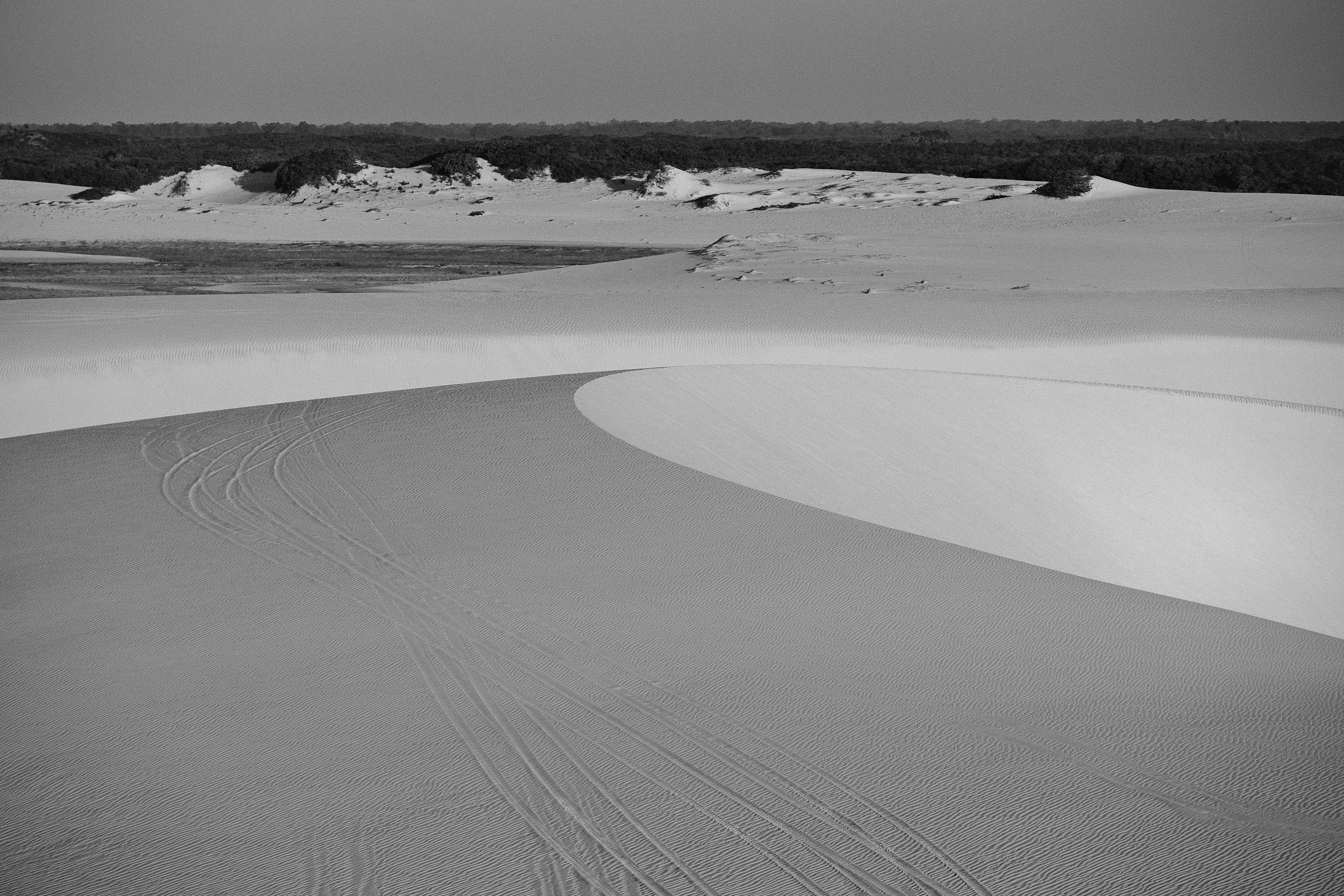
Sand dunes and forests.
Fujinon XF 50-140mm F2.8 R LM WR @f/5.6
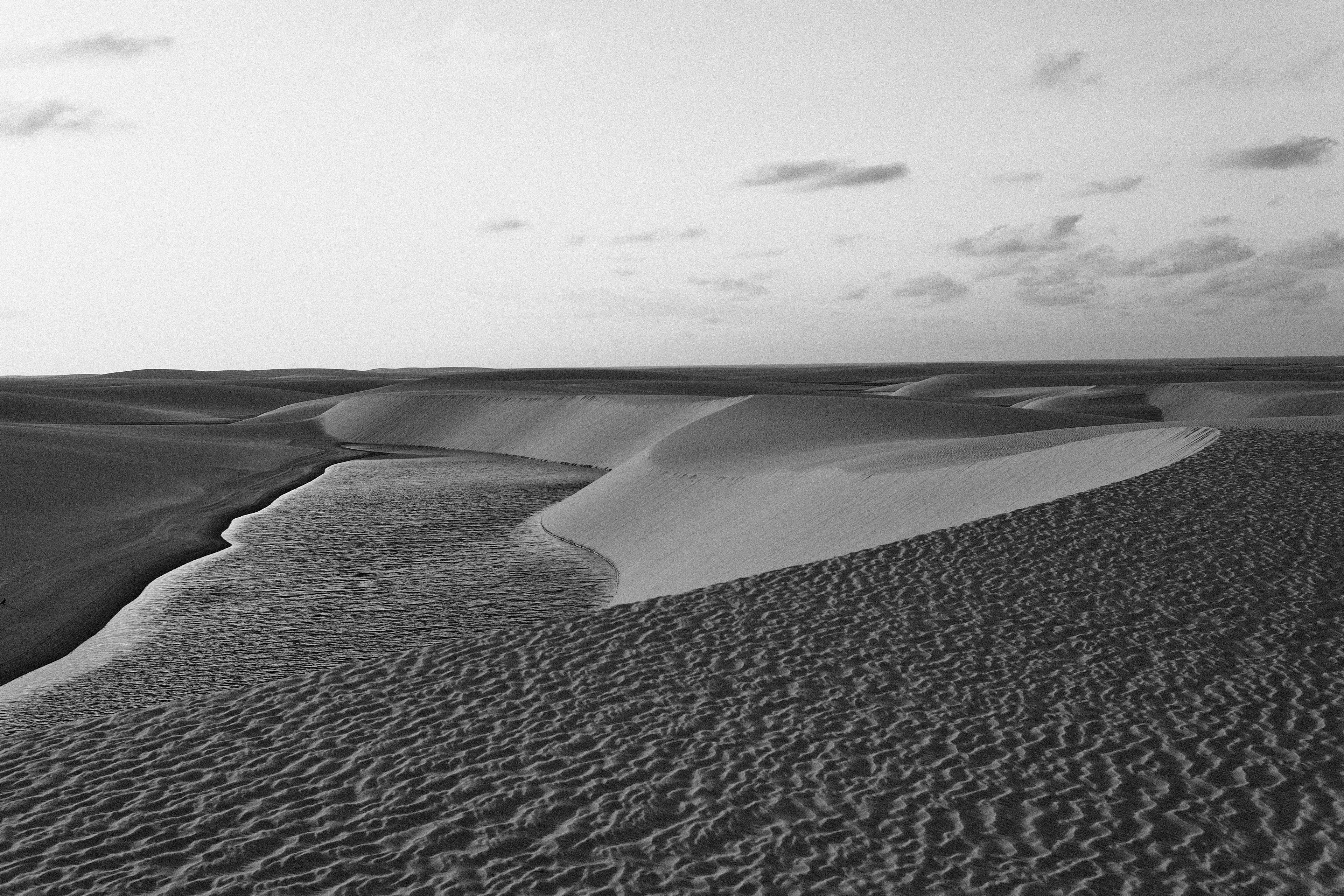
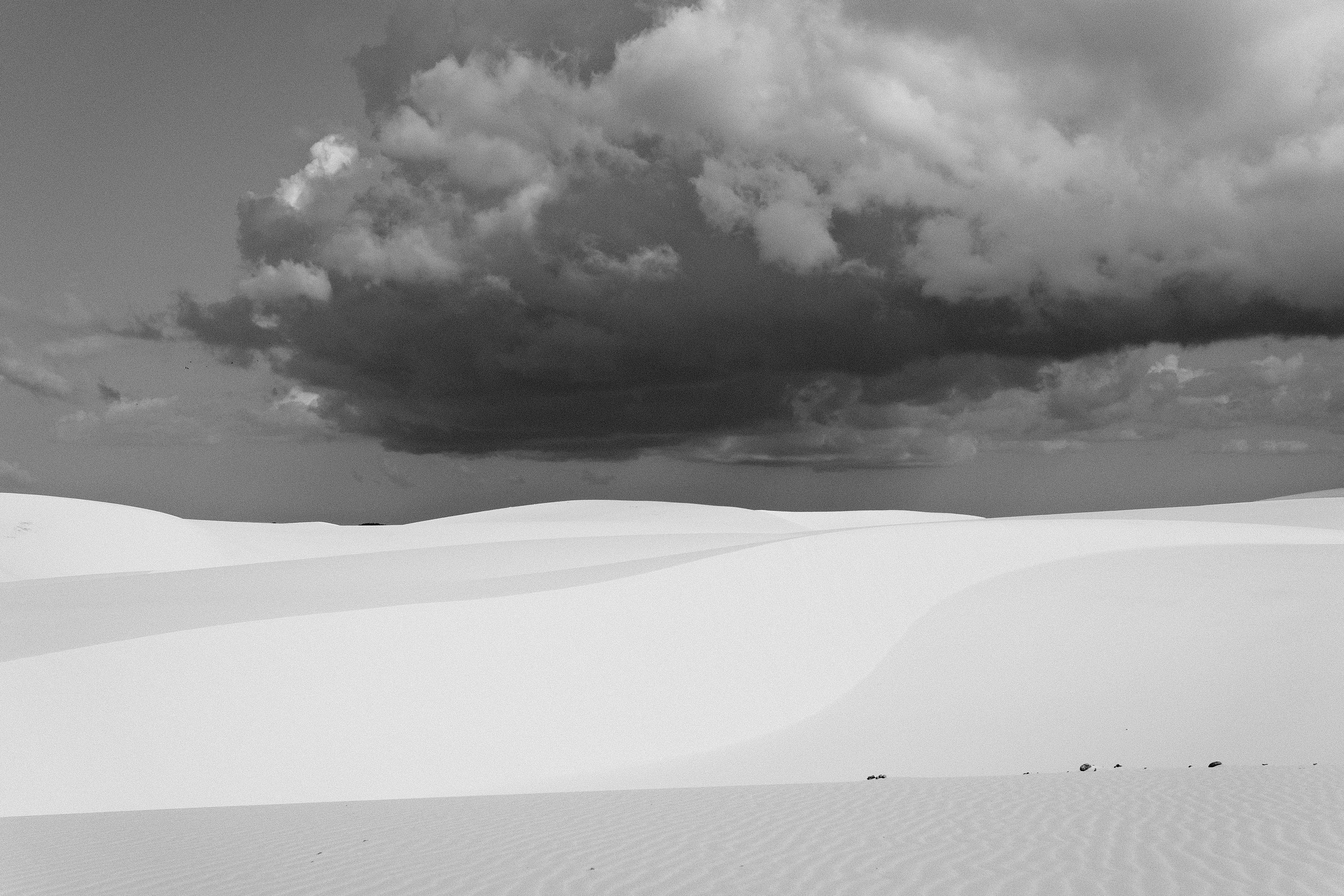
We spent the whole day within the park, stopping every now and then to take a few pictures and swim in the lagoons. At the end of the day, slightly before the sunset, we drove all the way up to one of the tallest dunes we could find where we could watch the sun slowly fading away in the horizon. After that, we drove back to the village, before complete darkness would reach us.

Sand road from the National Park leading to Atins.
Voigtländer NOKTON 35mm F1.2 @f/2
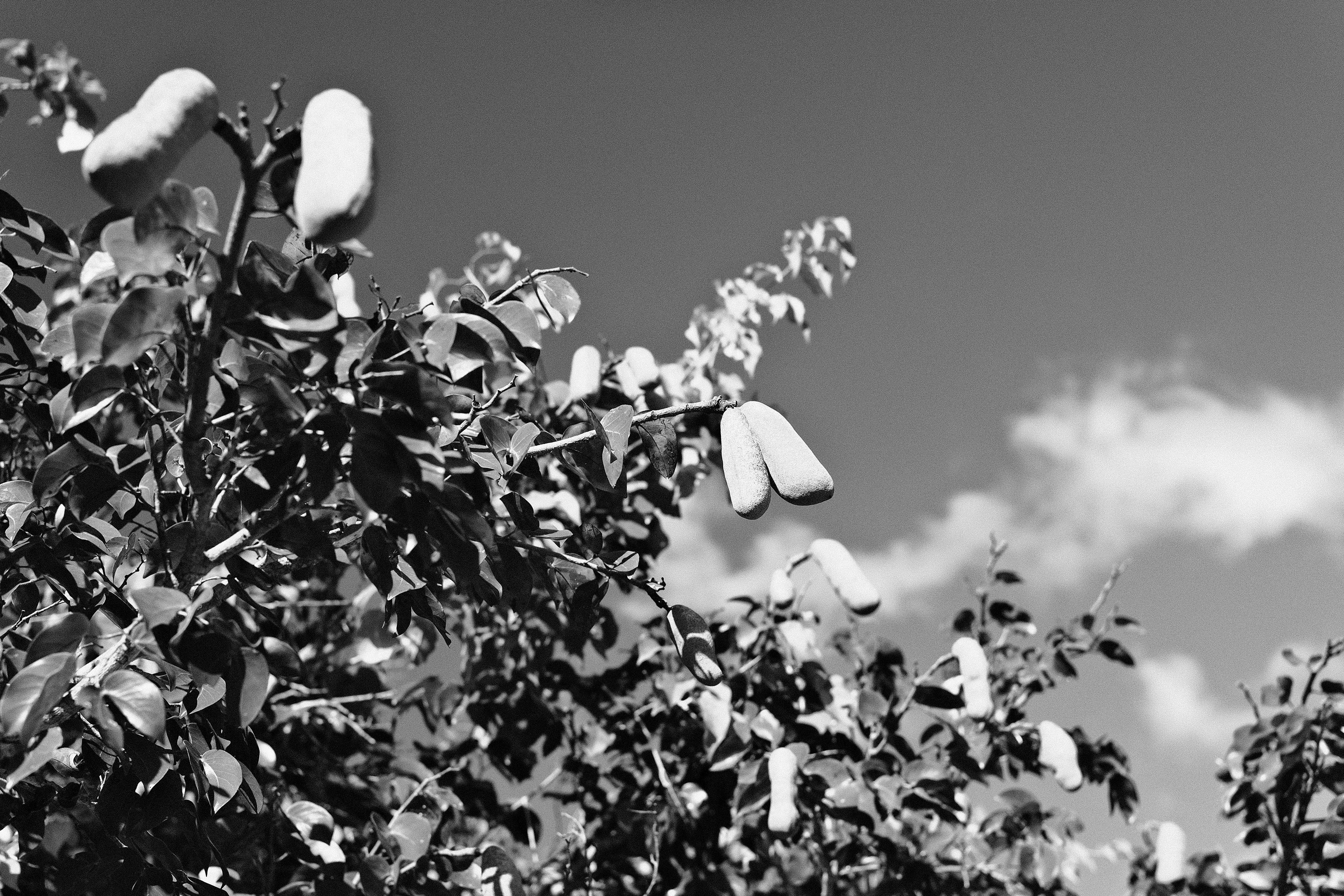
Jatobá (Hymenaea courbaril) fruit.
Voigtländer NOKTON 35mm F1.2 @f/4
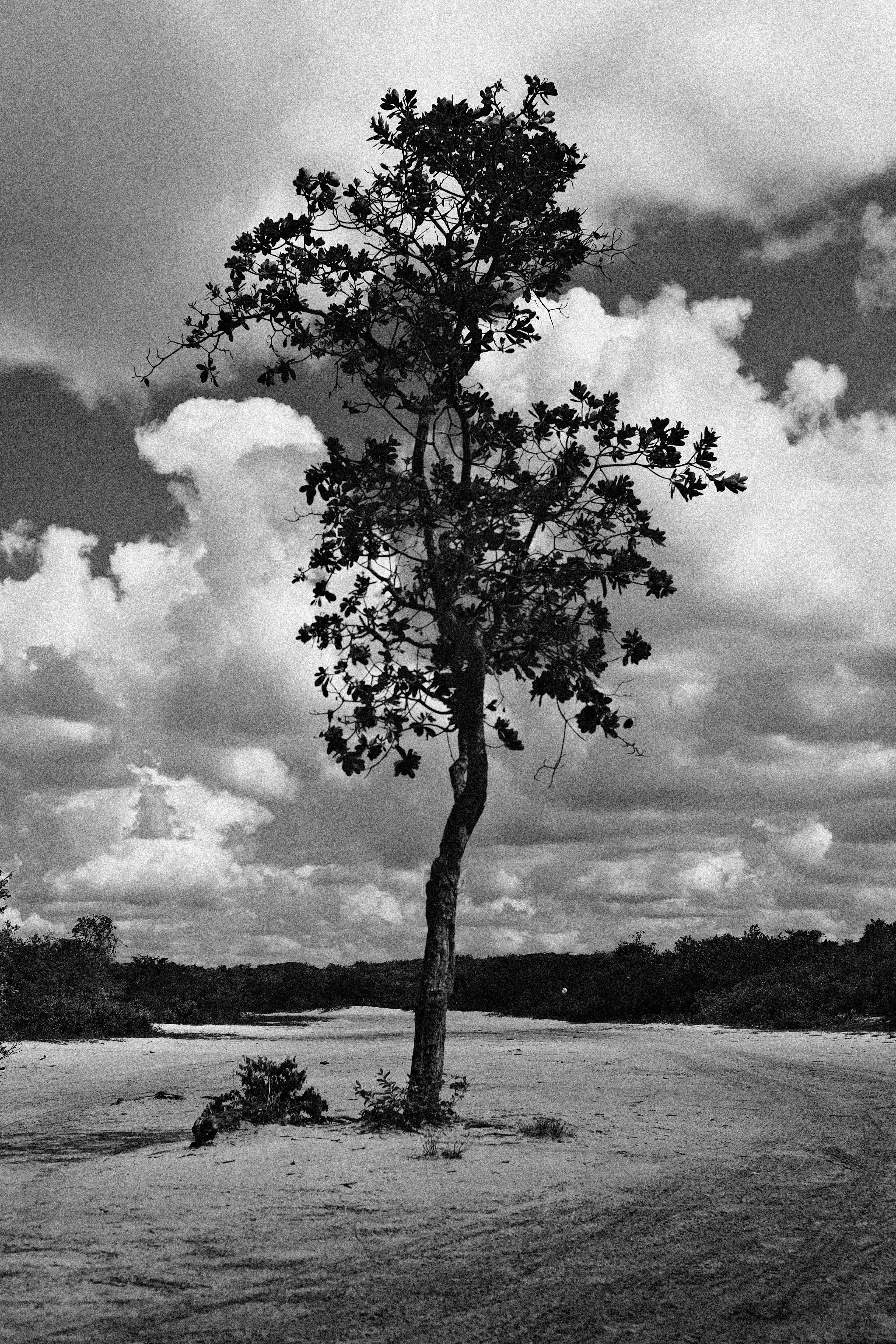
Lonely tree near Lagoa Bonita.
Voigtländer NOKTON 35mm F1.2 @f/4
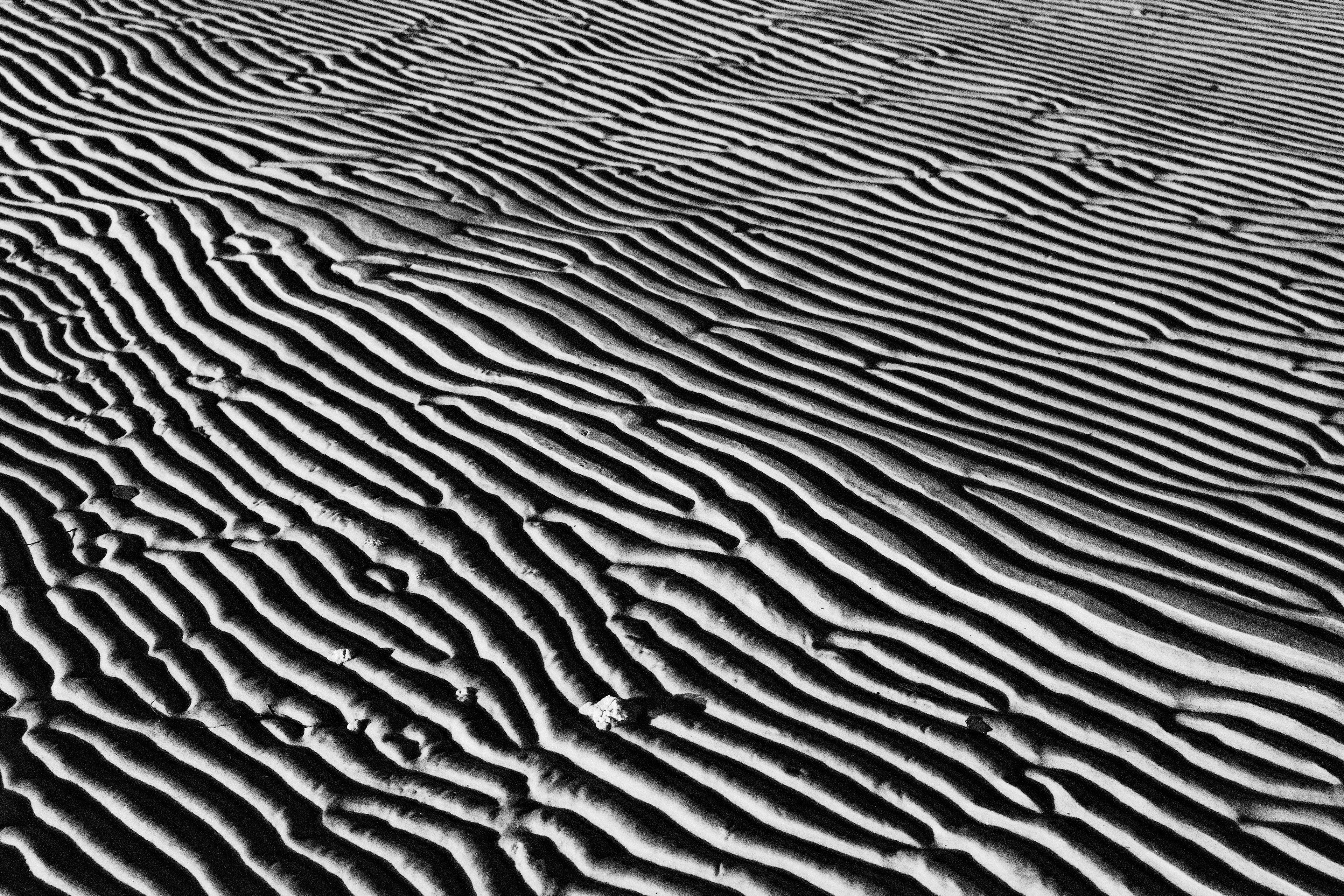
Atins beach at night.
Voigtländer NOKTON 35mm F1.2 @f/9
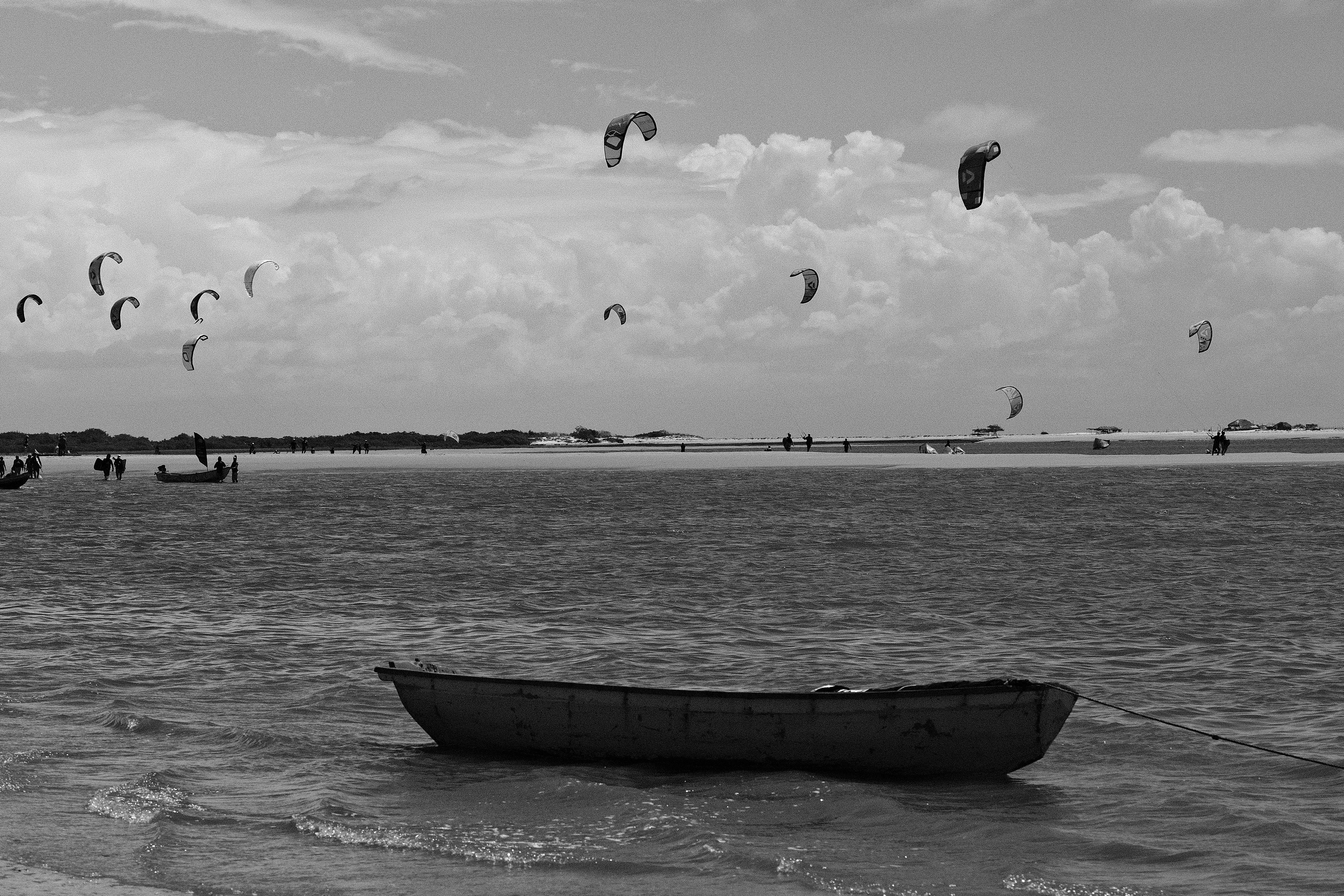
The following day, the 15th of July, we took the morning to rest from the very demanding past couple of days. After a slow breakfast at the lodge we headed to the nearby beach where several kite-, and wing-surfers go. One thing that caught my attention is that the majority of surfing schools and establishments are run by foreigners. Here you could also hire a boat to take you across the lake and into the ocean, but we passed on that as we were short in time.

Kite surfers at the Atins beach.
Fujinon XF 50-140mm F2.8 R LM WR @f/8
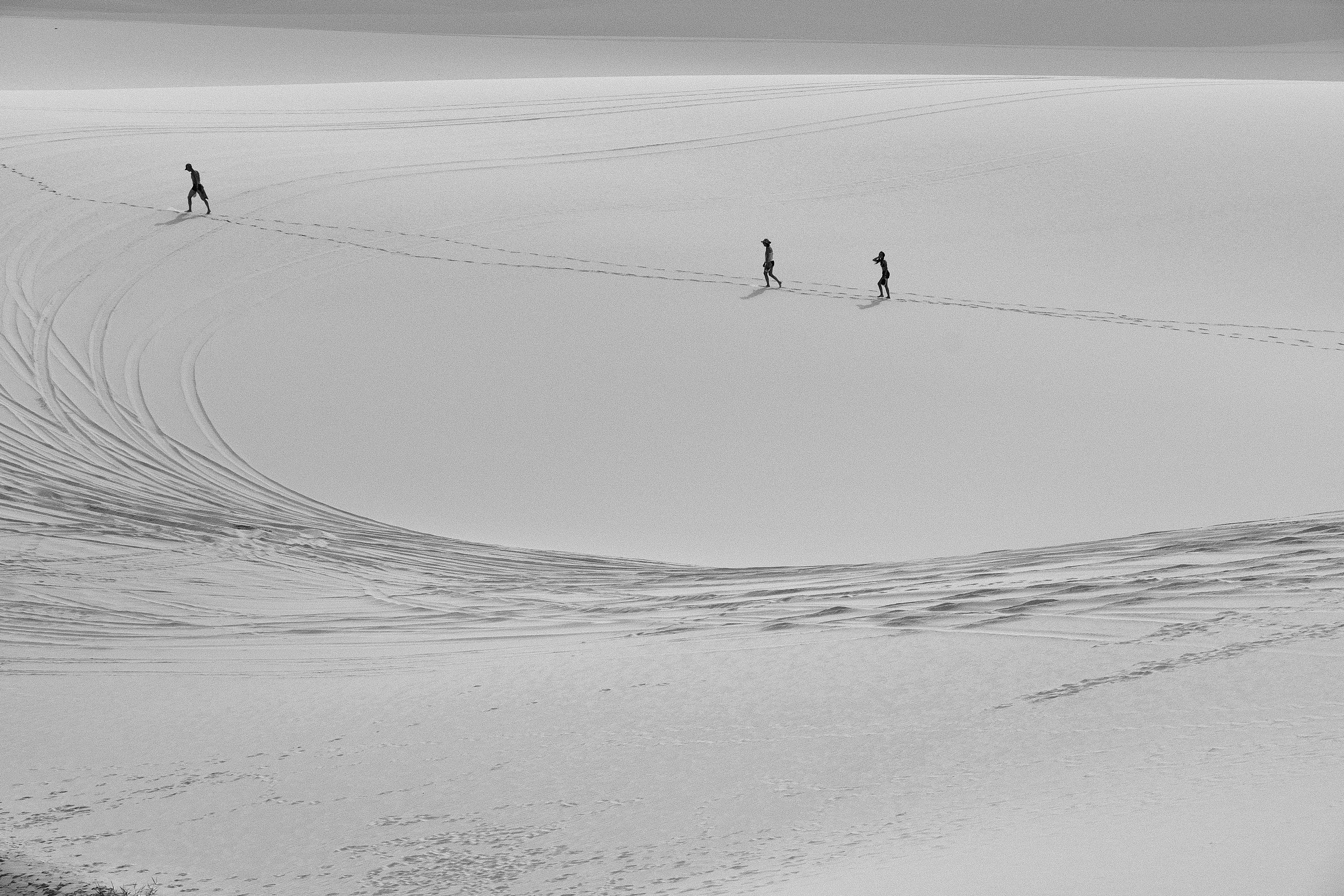
In the evening we drove back to the park, this time we kept our route within what is called 'Canto do Atins', a portion of the park closer to the village so we wouldn't need to drive too far inside the park.
From there we watched the sunset for a second time, atop another dune.

Tourists walking on dunes.
Fujinon XF 50-140mm F2.8 R LM WR @f/11
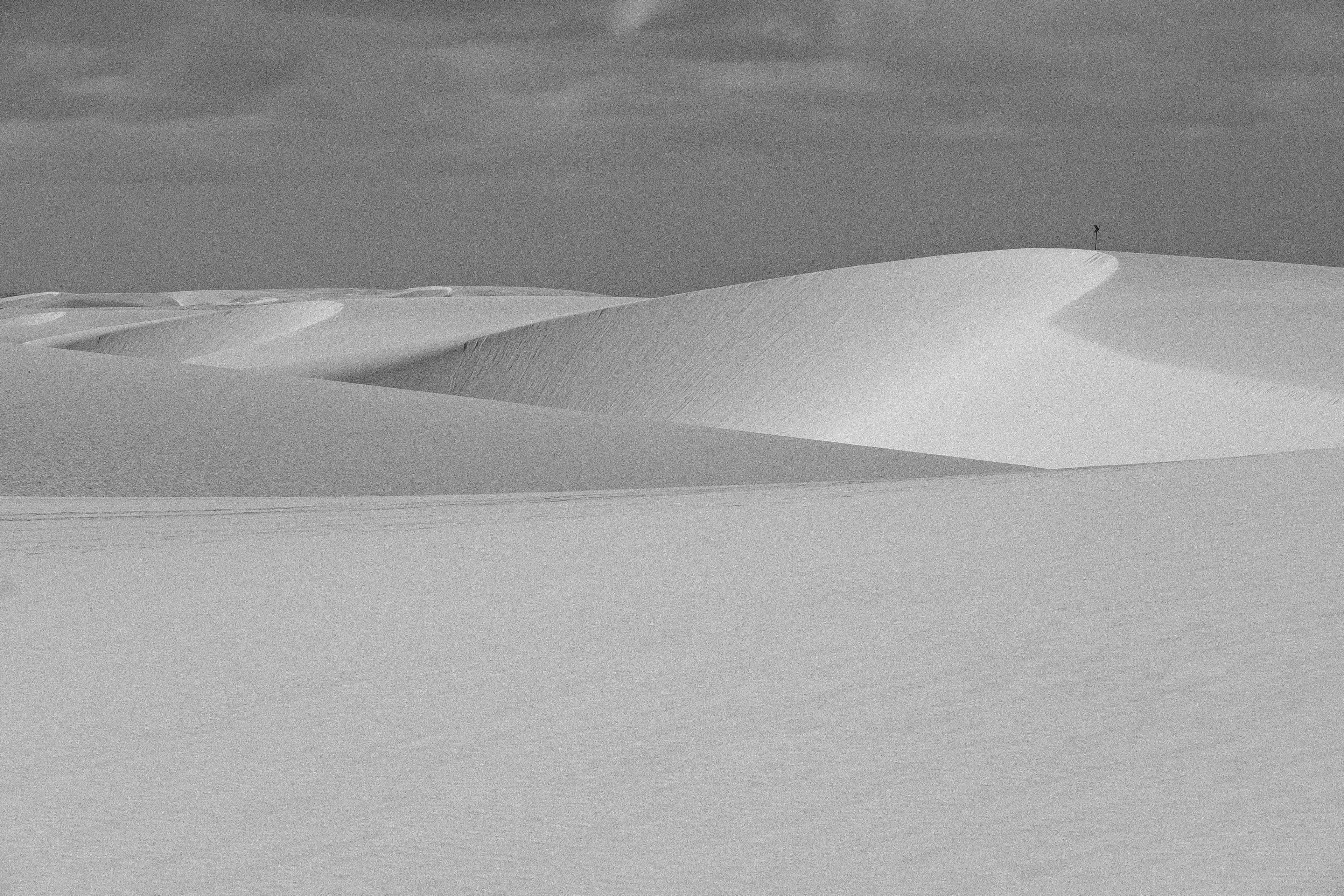
Sand dunes.
Fujinon XF 50-140mm F2.8 R LM WR @f/11
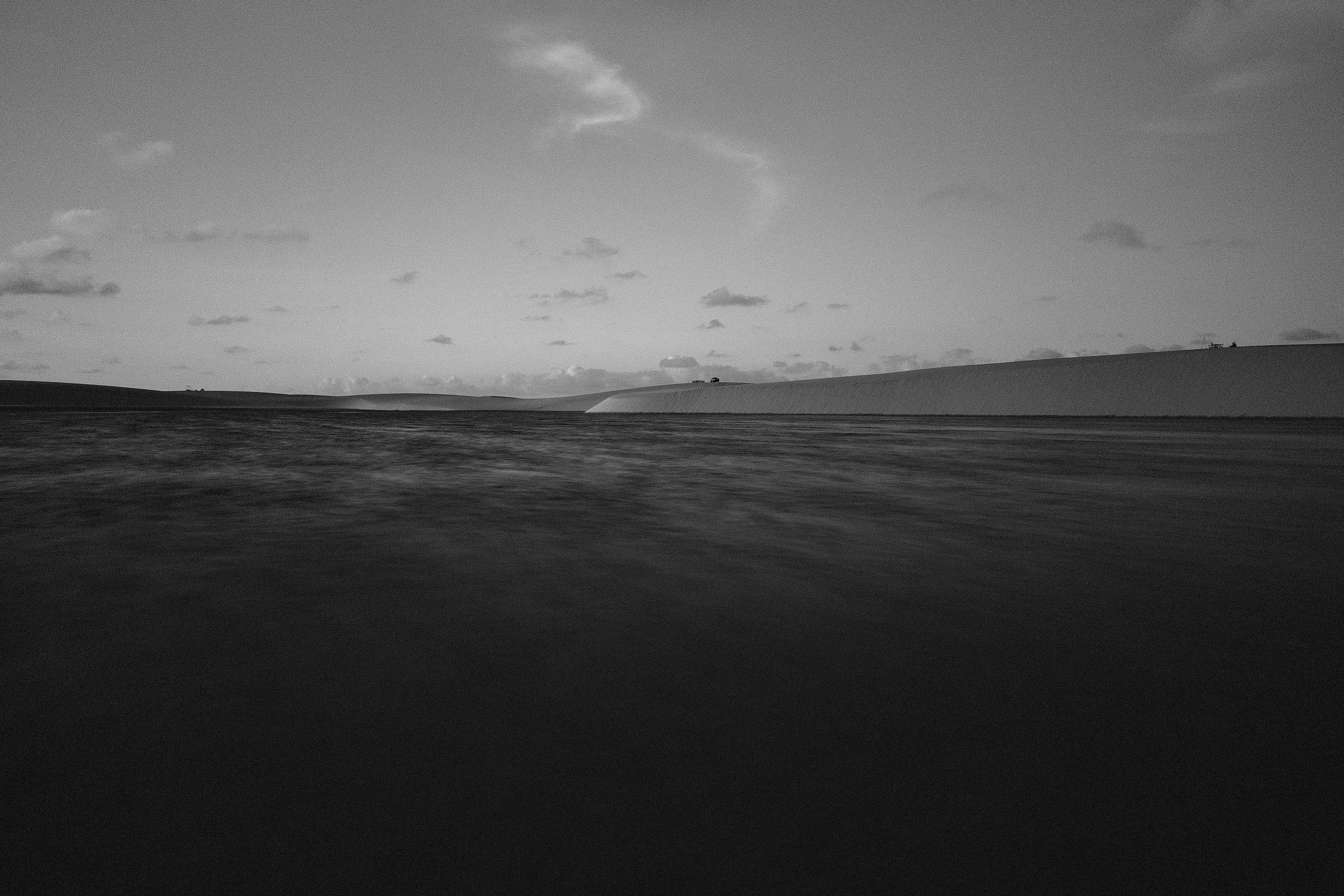
View from inside a lagoon.
Fujinon XF 16mm F2.8 R WR @f/11
In the 16th, we woke up very early to catch the sunrise in the park. Here for the first time we had only a driver and no guide with us, and boy what a ride. The driver took us to inside the park in less than 20 minutes, lightning fast. Well, I cannot complain as it was one hell of an adventure and it surely served to wake me up.

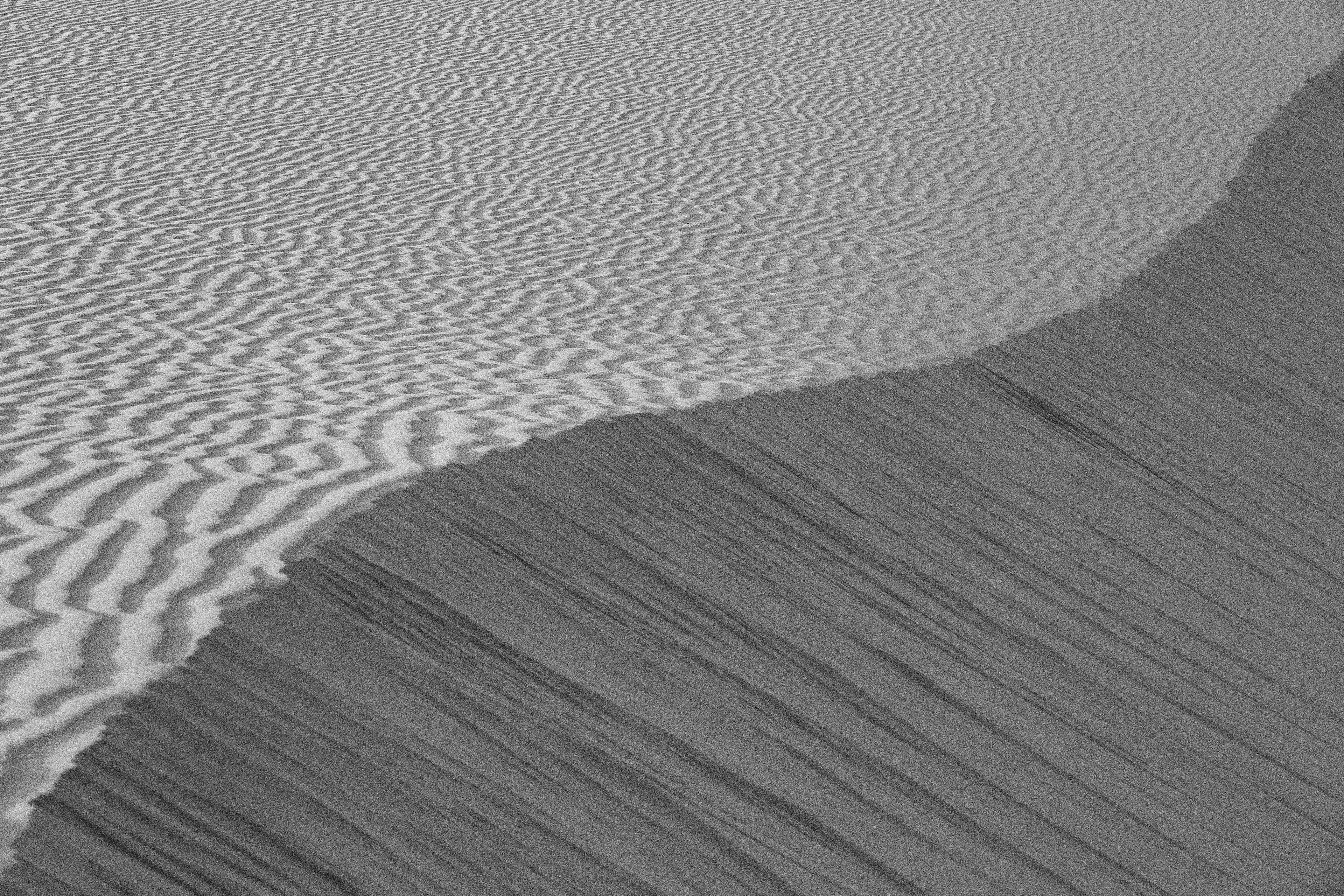
Textures on sunrise.
Fujinon XF 50-140mm F2.8 R LM WR @f/11
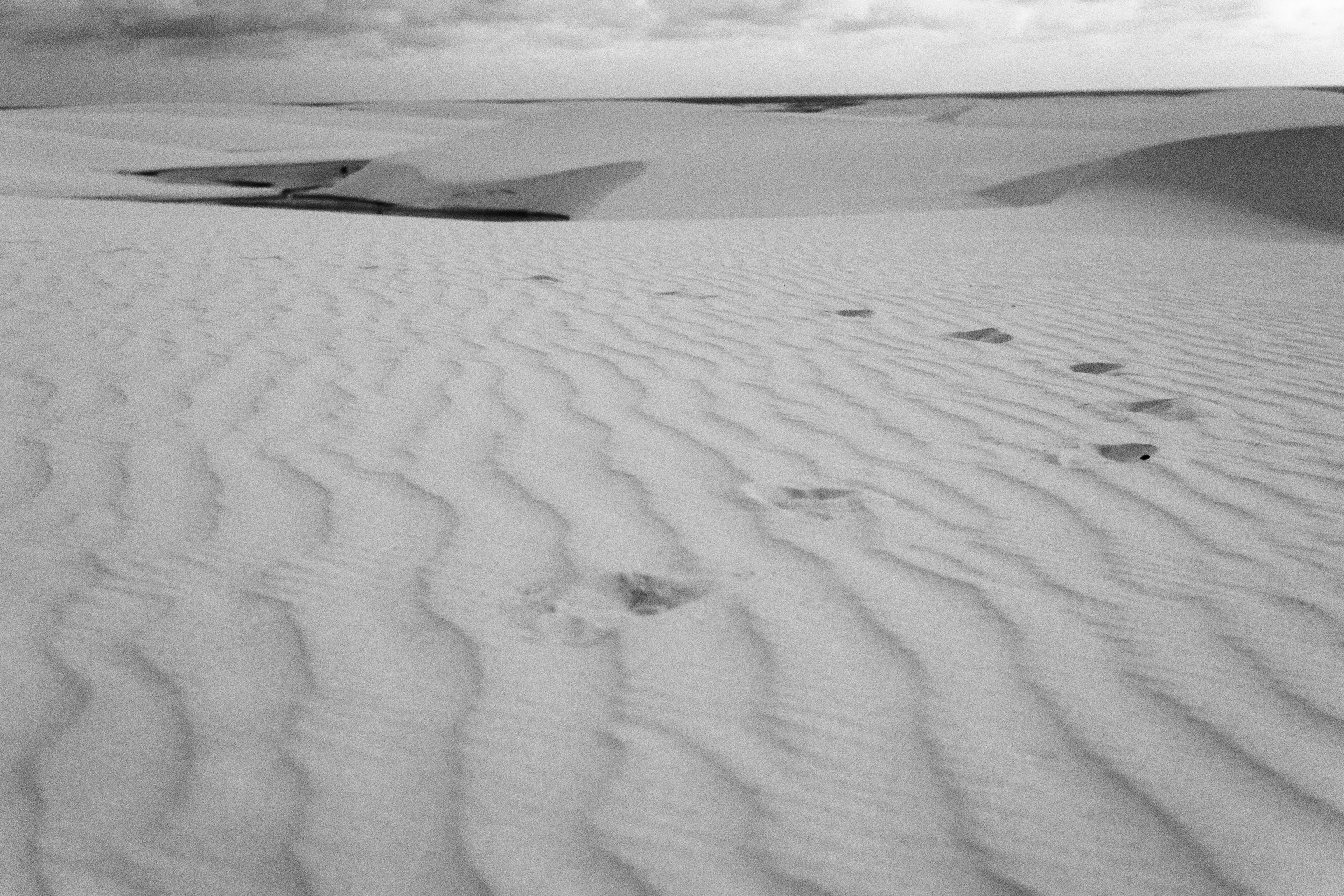
First footprints of the day.
Voigtländer NOKTON 35mm F1.2 @f/4
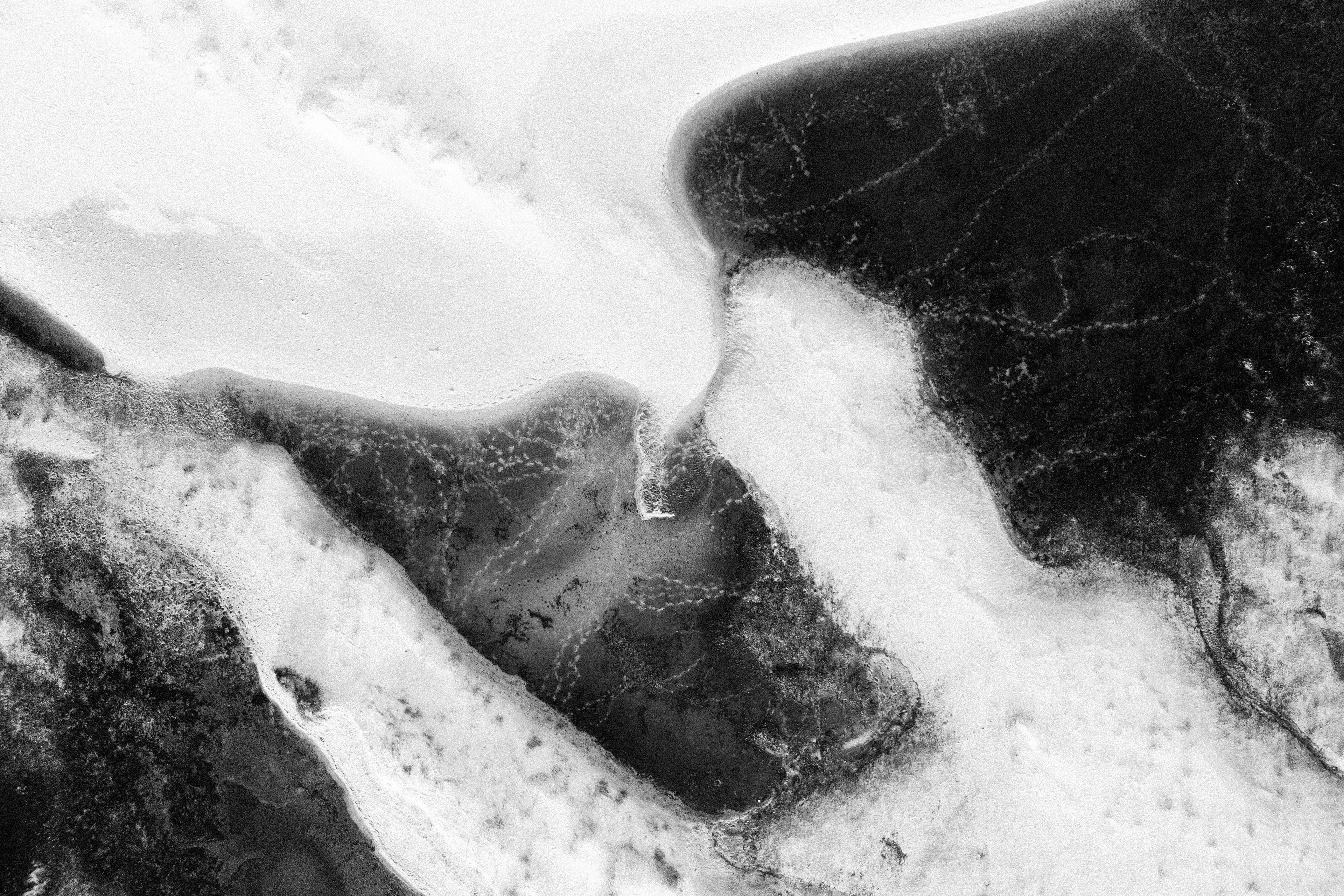
We had enough time to scout for a good position to watch the sun rise, stopping at a handful of dunes and checking the surroundings. Needless to say the only dim light we had was the moon's, which we were most grateful for. We've been told that during new moon it is nearly impossible to drive there, even with the lights (and there were many in that car) at full blast.

Animal footprints in the lagoons.
DJI Mini 3 Pro
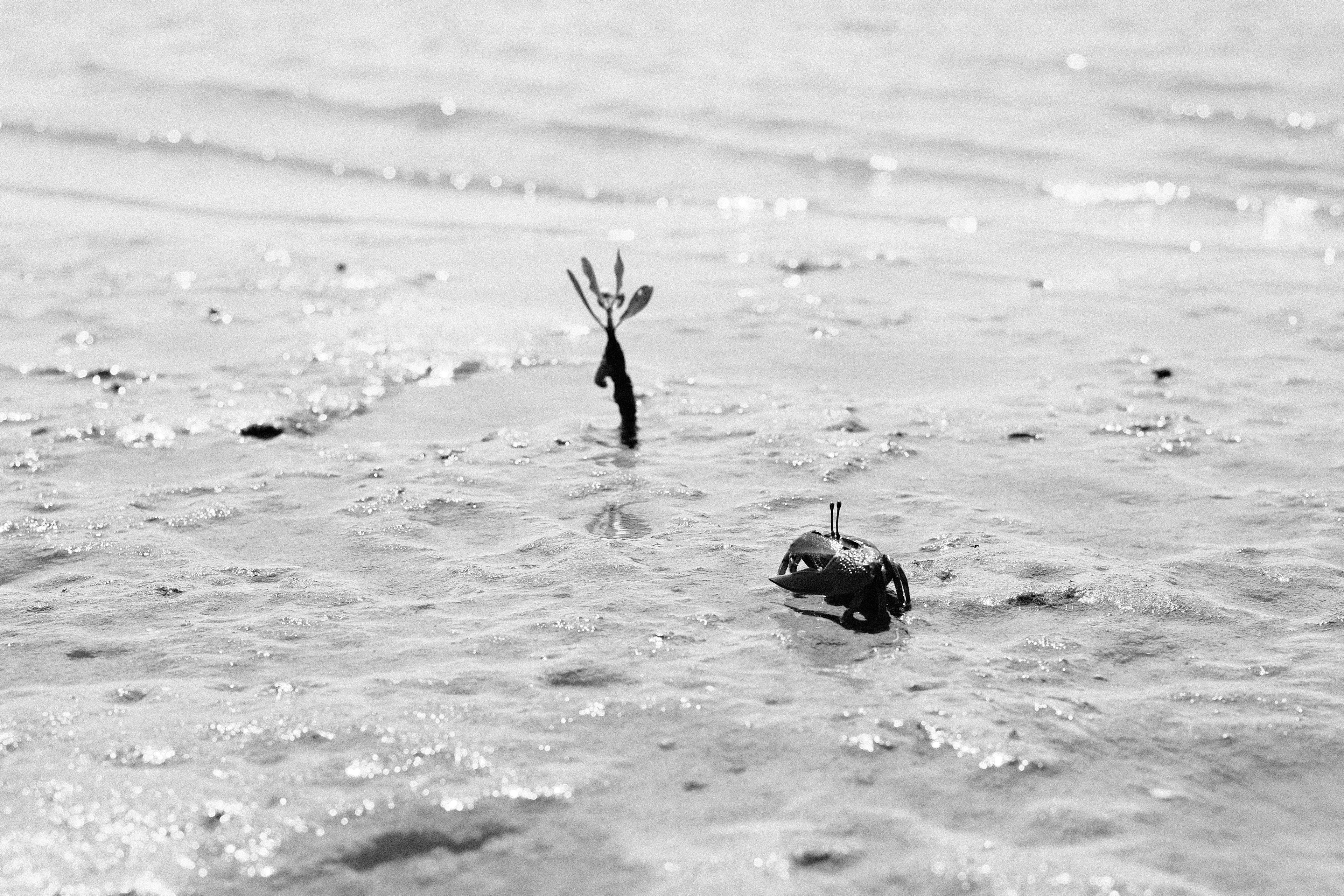
After the sunrise we drove a little longer around the park stopping at one more lagoon to take a swim and then back to the village. In the evening we went to the beach a second time to relax a little bit more. I took my time to walk around and explore that region a bit more reaching the swamps where I found many small animals that at first I thought were debris or something like it.
Crab by the lagoon.
Crab by the lagoon.
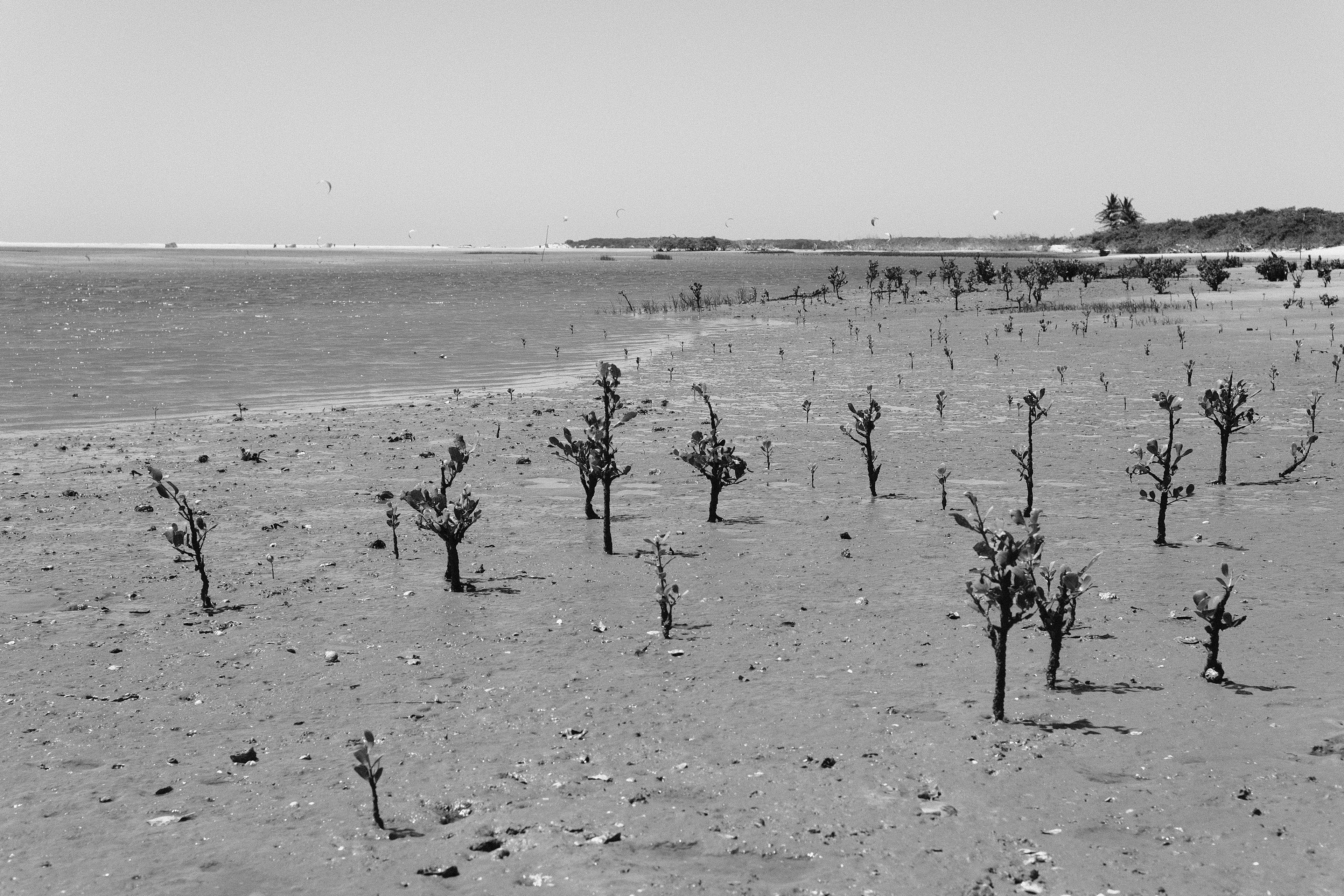
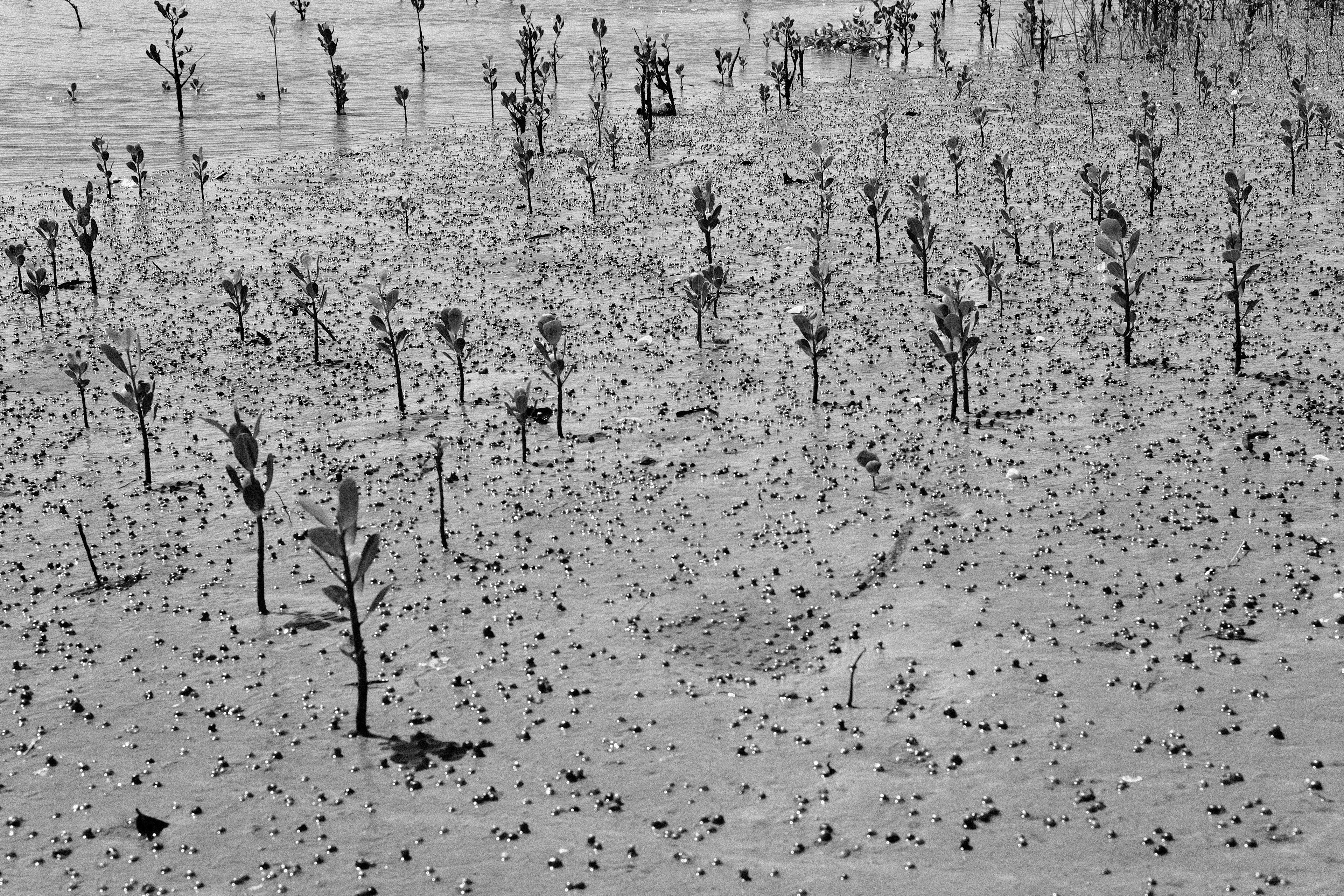
Young mangrove.
Young mangrove.
Small animals scattered all over the shoreline.
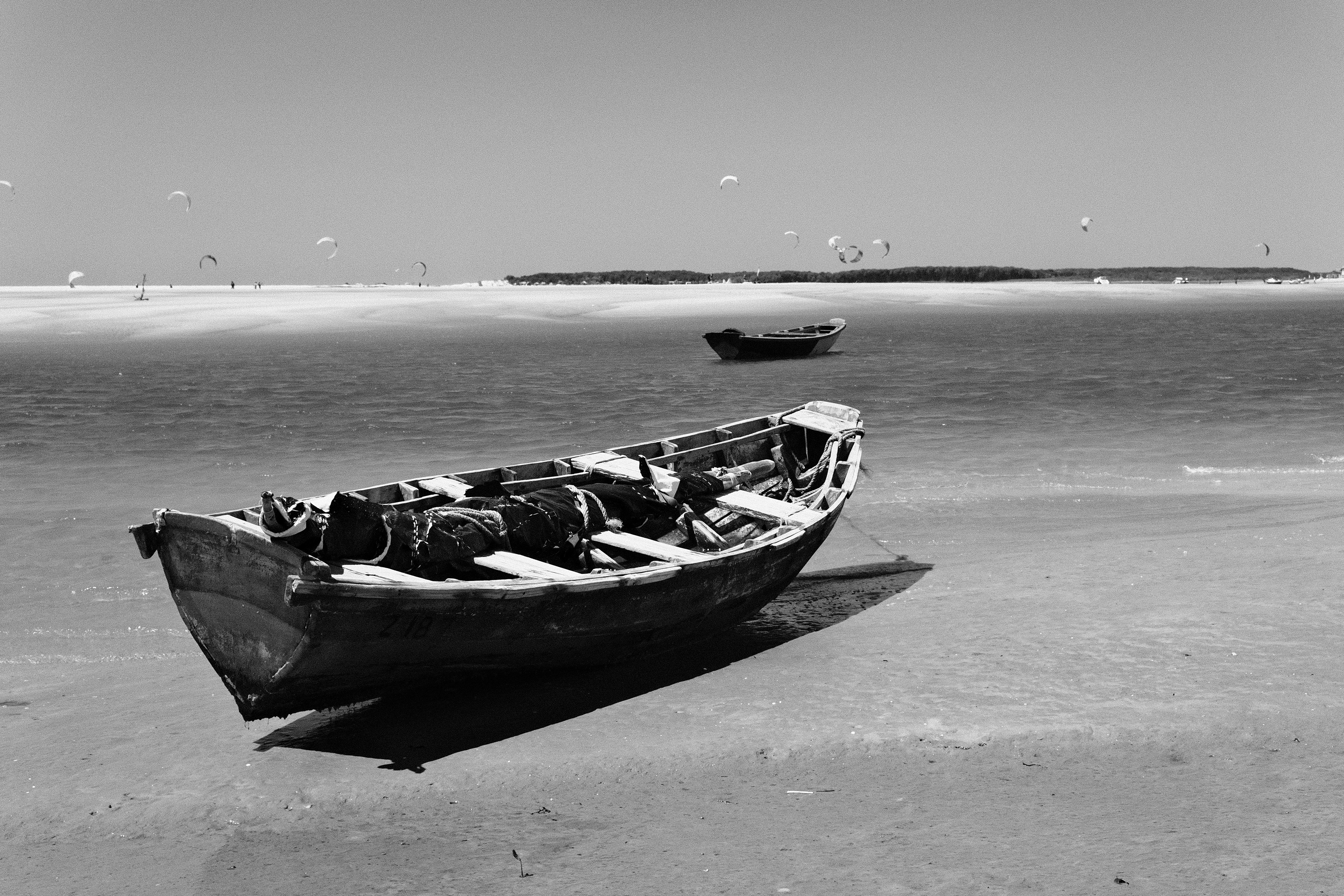
Boat at the Atins beach.
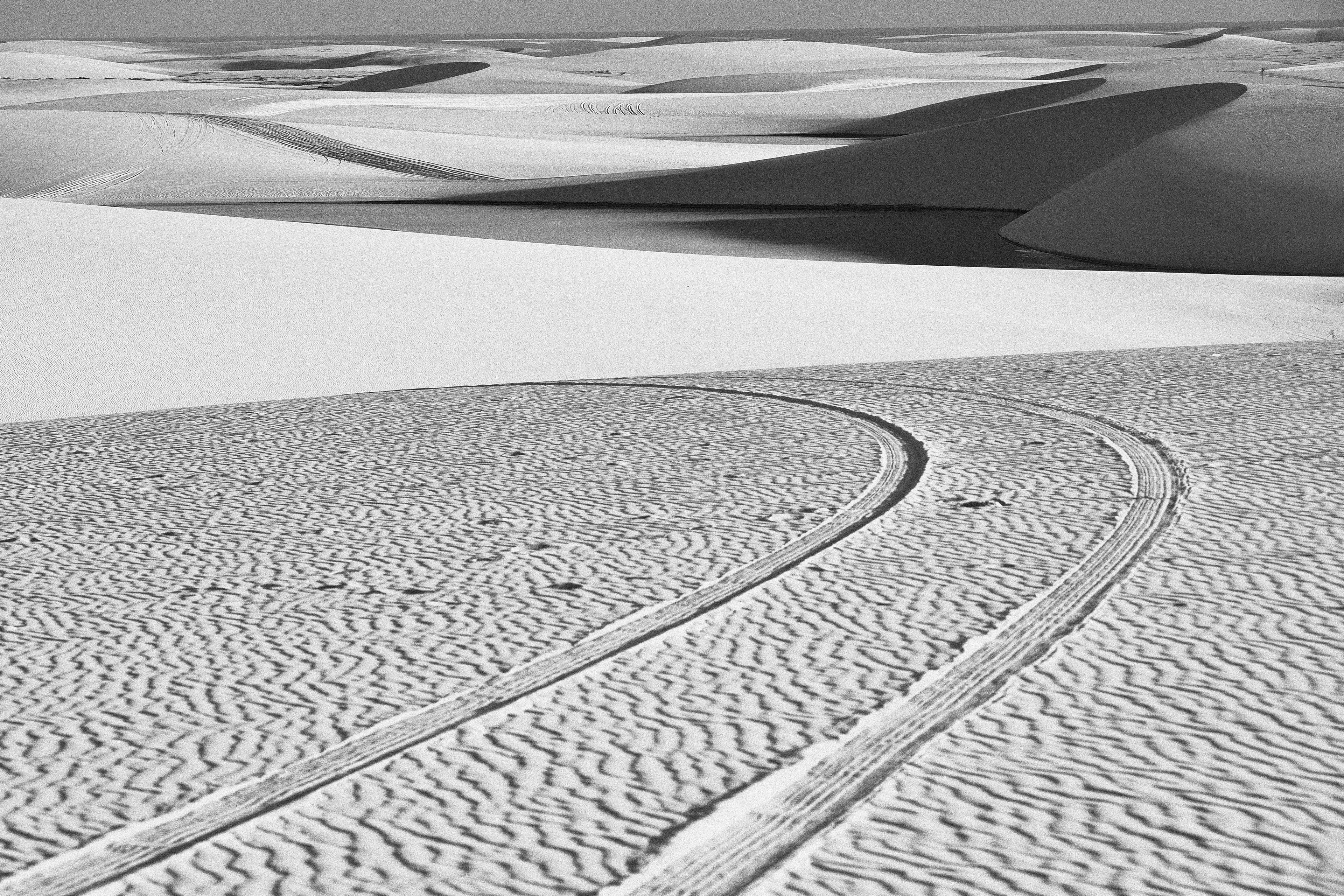

Dunes at sunrise.
Fujinon XF 50-140mm F2.8 R LM WR @f/8
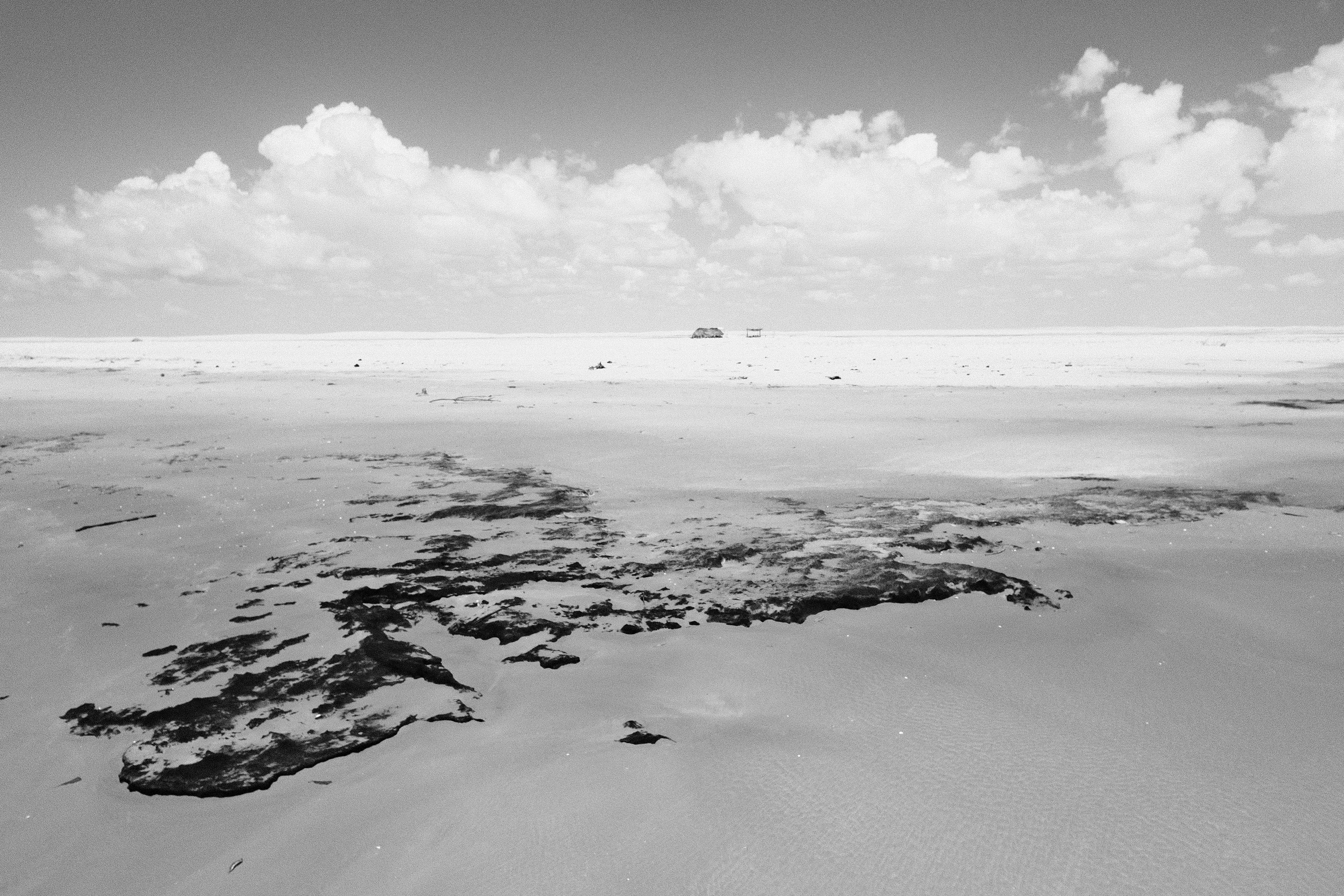
July 16th: Our last day within the park was the wildest. We had once again the same drivers who drove us around the park the first day. This time, however, our destination was a bit unusual: the Rio Negro river delta. On our way we stopped once again at a restaurant to book a slot for lunch and pre-order our food. The restaurant was in one of the small villages around Canto do Atins. We then proceeded to the river delta. 
It was a long ride, most of it by the beach. The route is quite tricky and requires an experienced guide as the tide changes frequently and hence the lagoons. Every now and then they would stop the car or slow down enough so that the guide could lean over and put his finger in the water below us to taste it. This way he would know where and how close to the ocean and/or river we were.

Black earth surfacing the ocean shore line.
Fujinon XF 16mm F2.8 R WR @f/8
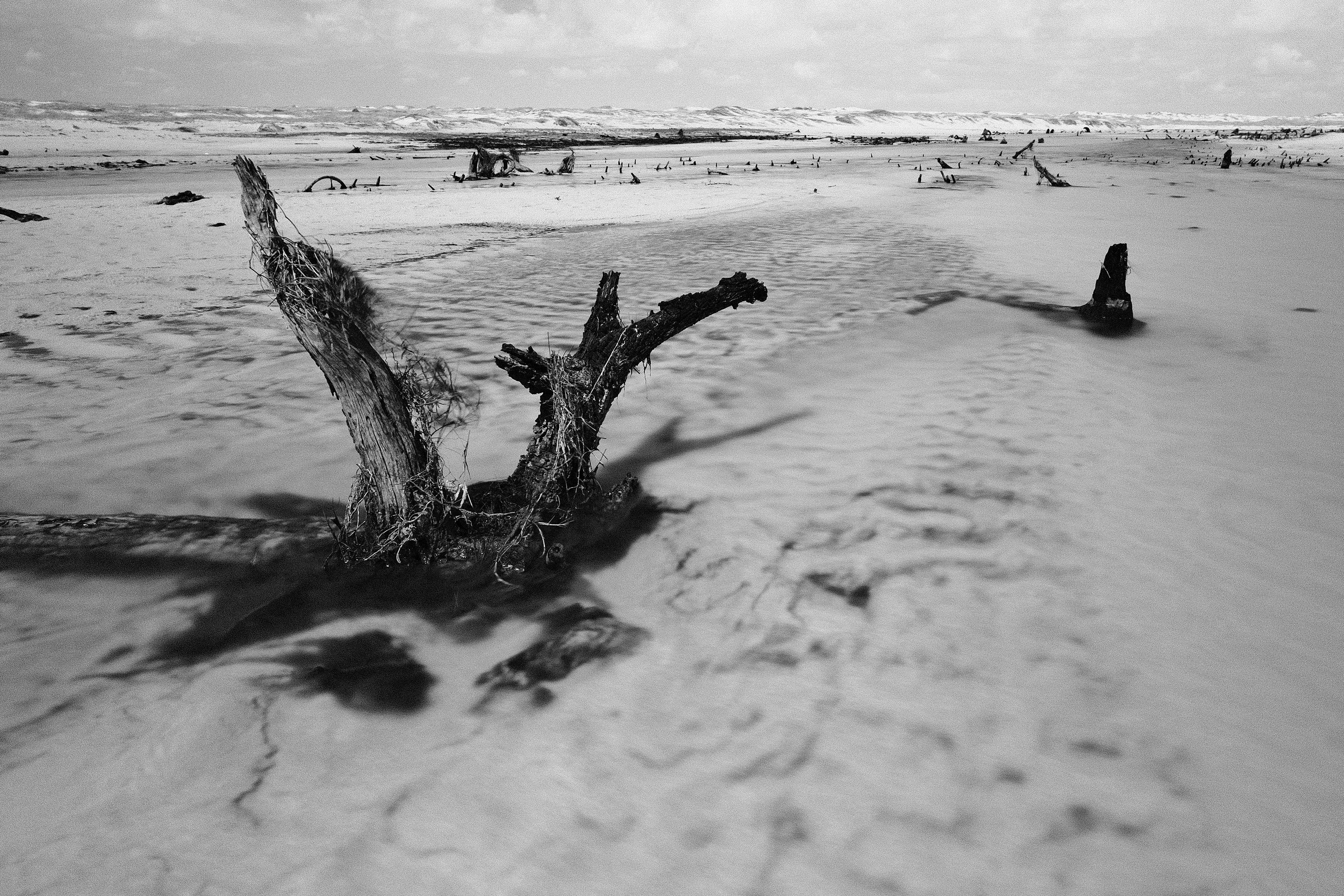
Dead mangrove.
Fujinon XF 16mm F2.8 R WR @f/11
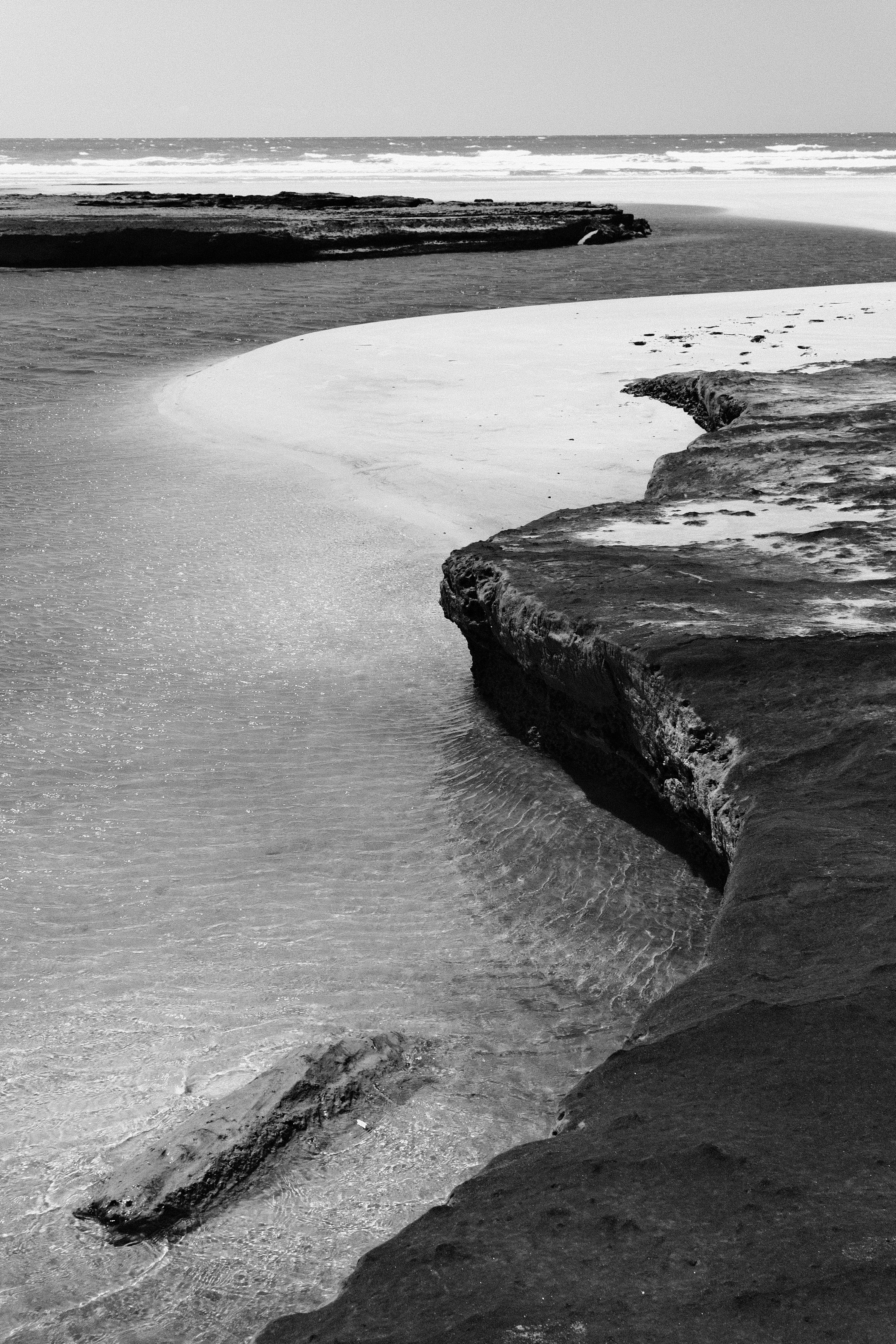
Natural pool by the ocean.
Voigtländer NOKTON 35mm F1.2 @f/11
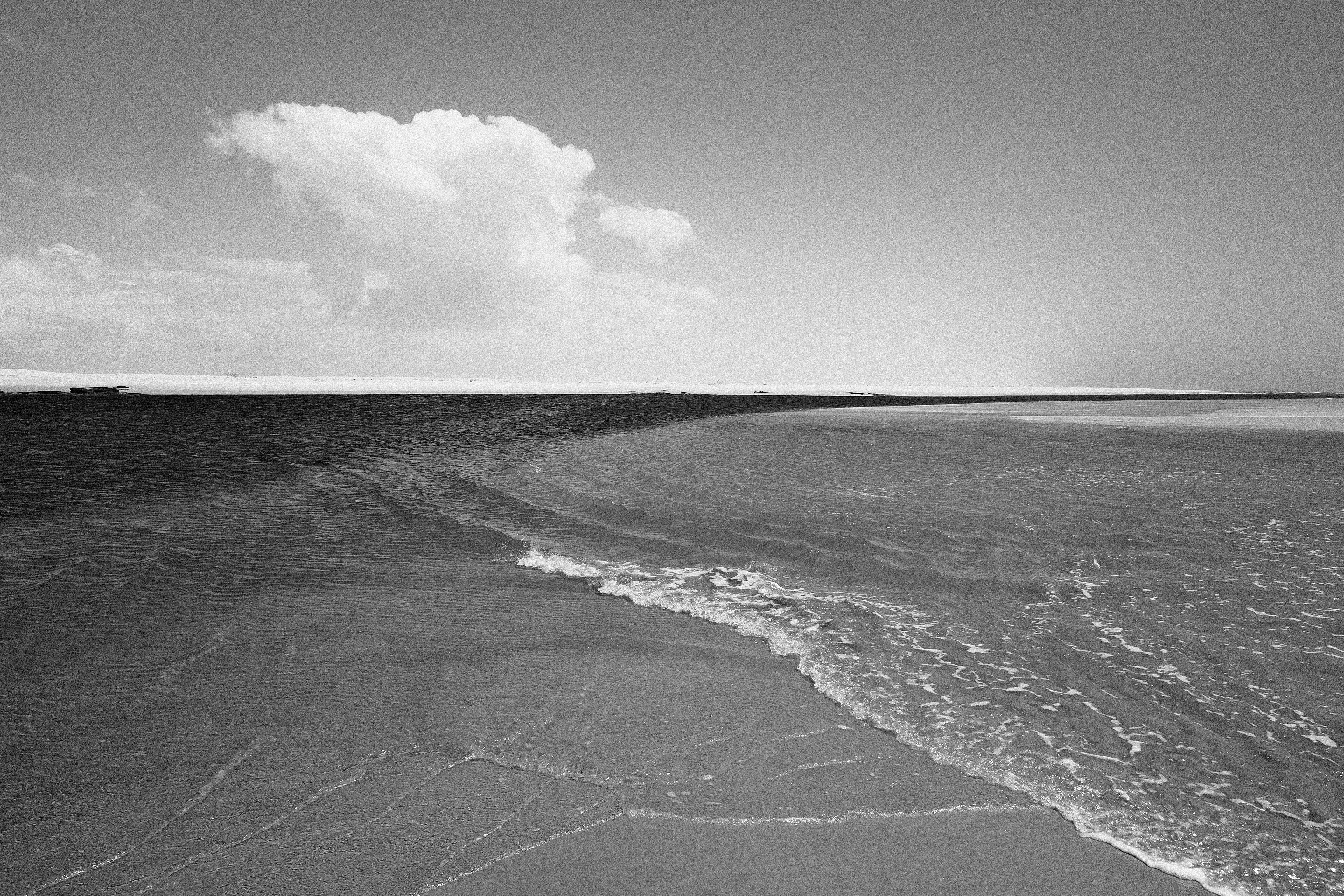
The Rio Negro river flowing into the ocean.
Fujinon XF 16mm F2.8 R WR @f/11
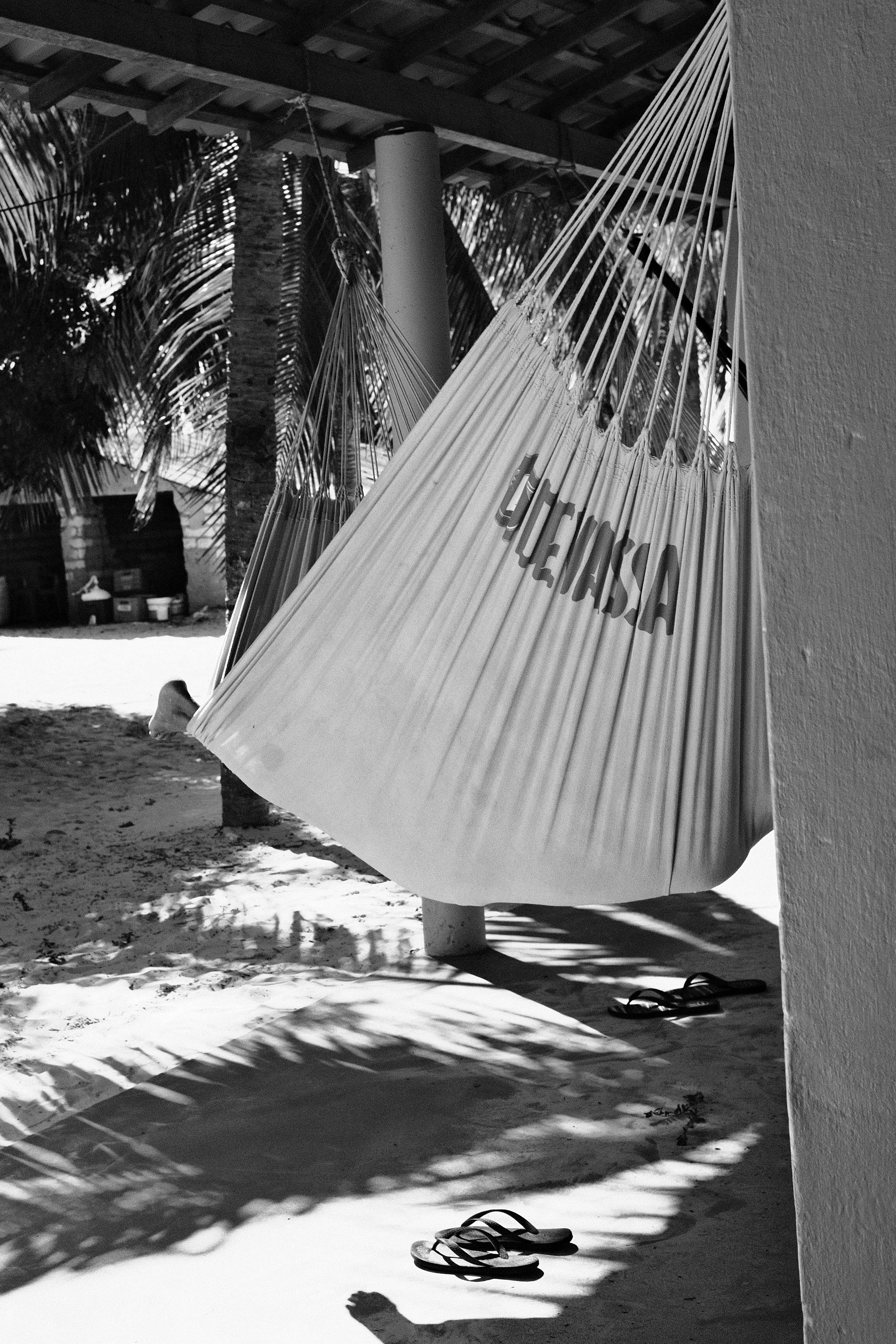
A guide sleeps in a hammock.
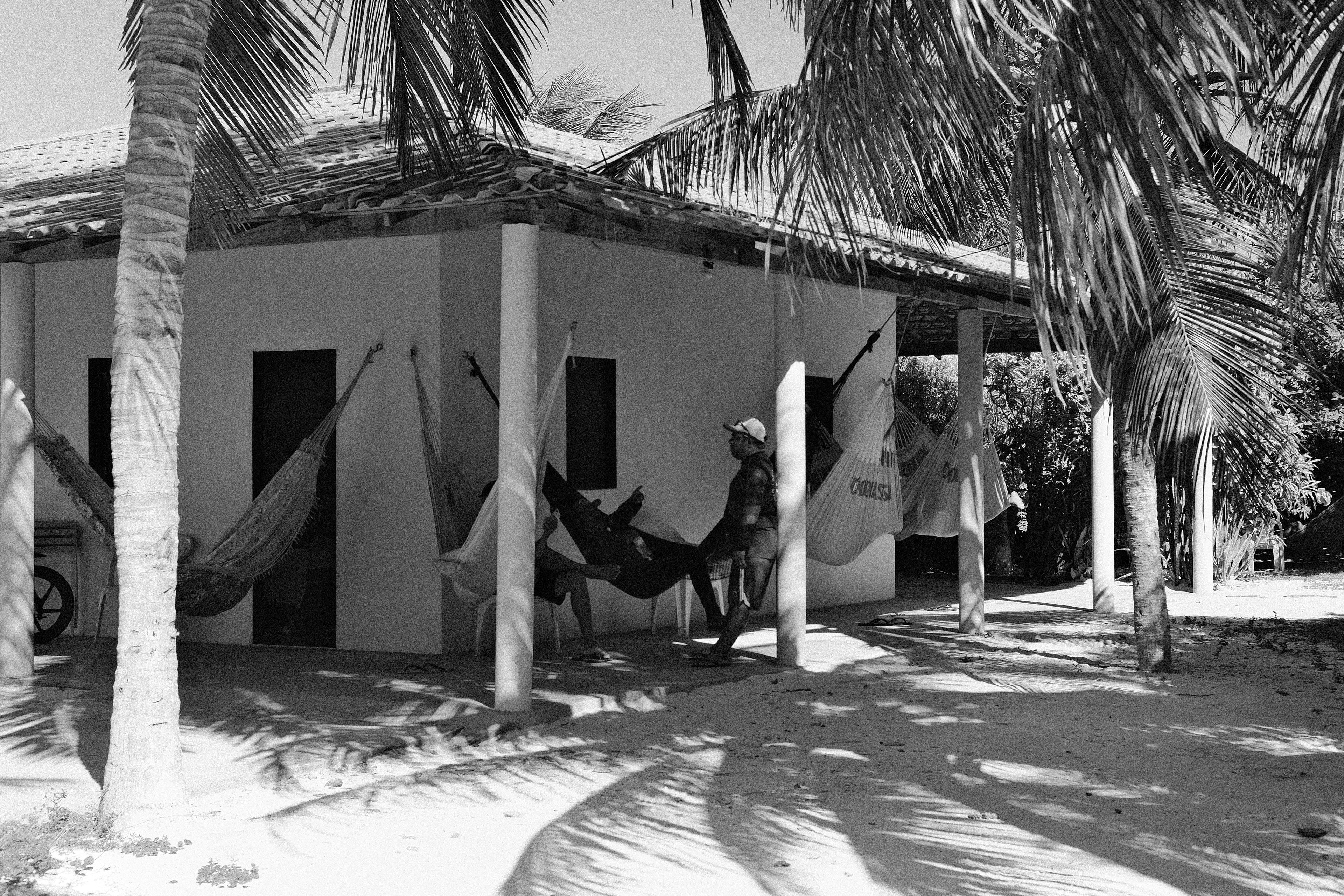
Guides gather after lunch while they wait for their groups to finish.
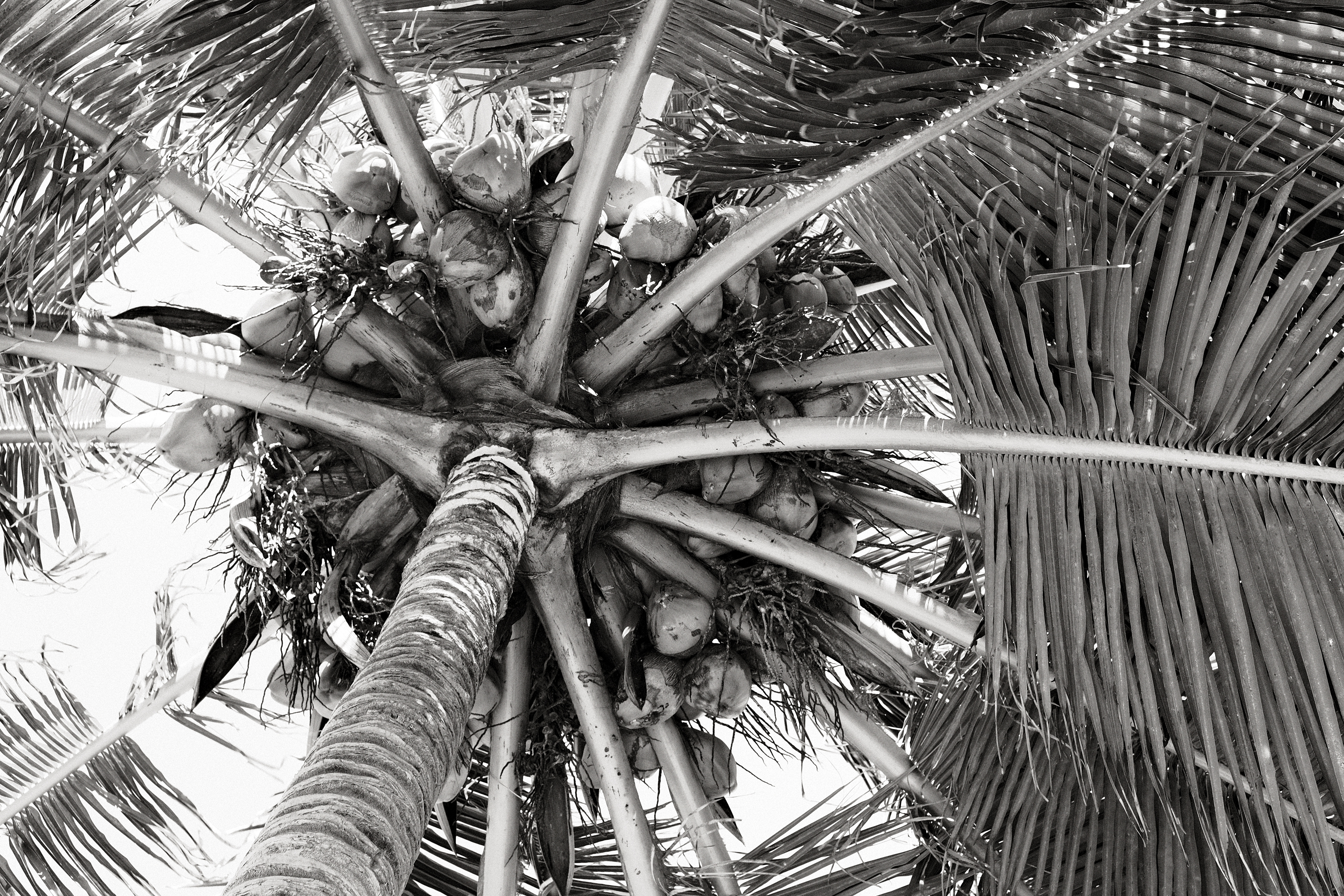
Coconut tree.
Coconut tree.

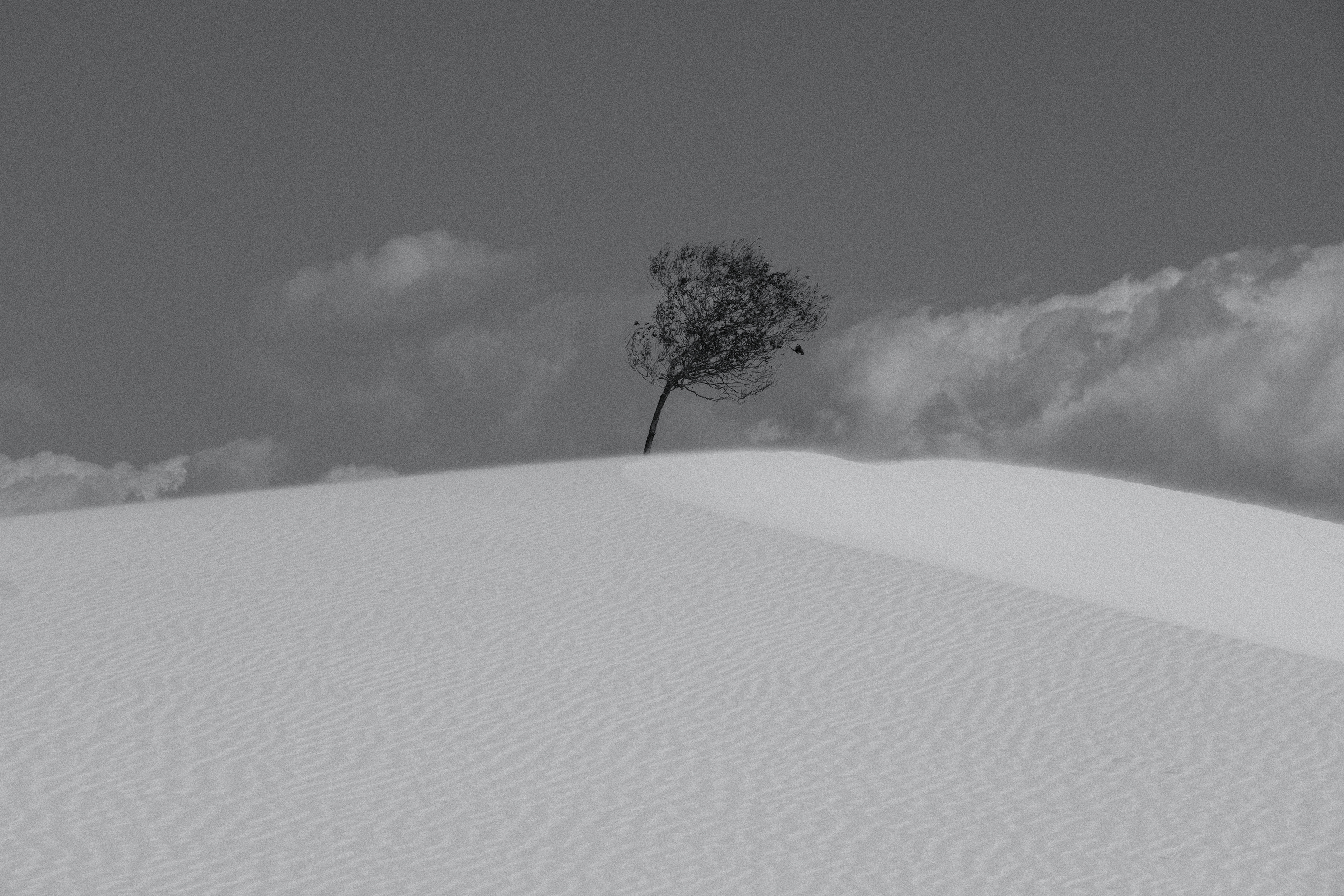
Lone tree atop a sand dune.
Fujinon XF 50-140mm F2.8 R LM WR @f/11
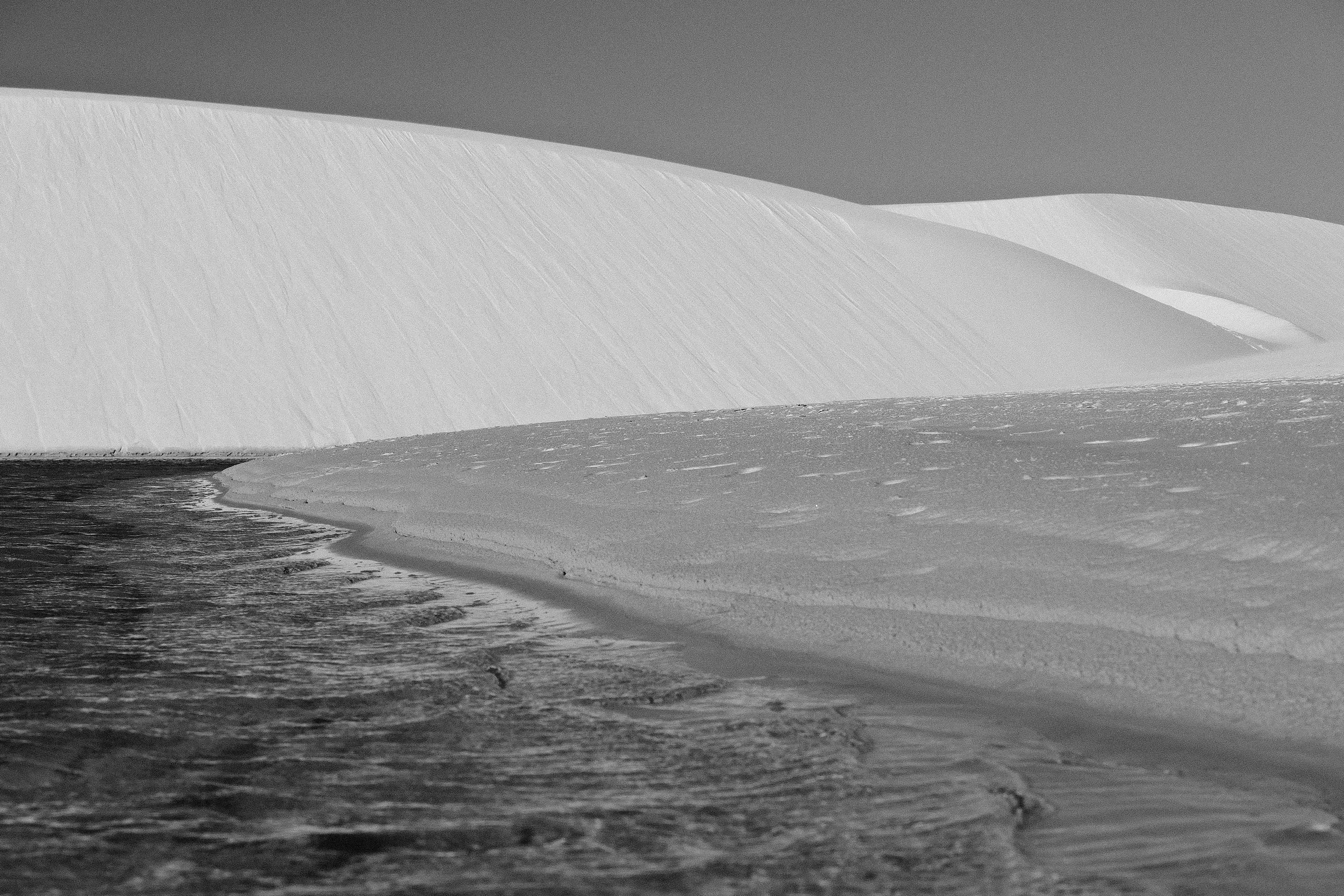
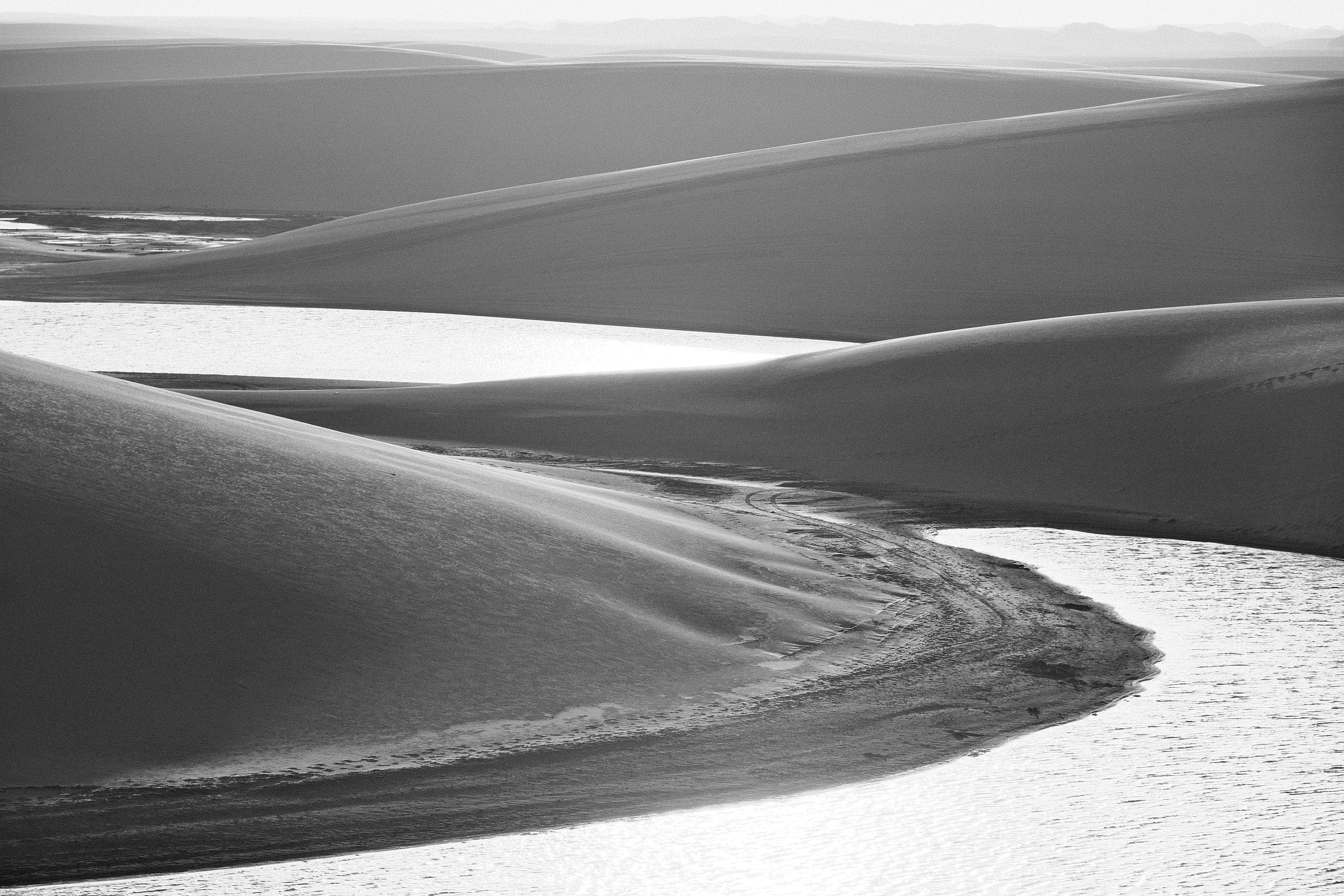
Lagoon and sand dunes.
Fujinon XF 50-140mm F2.8 R LM WR @f/11
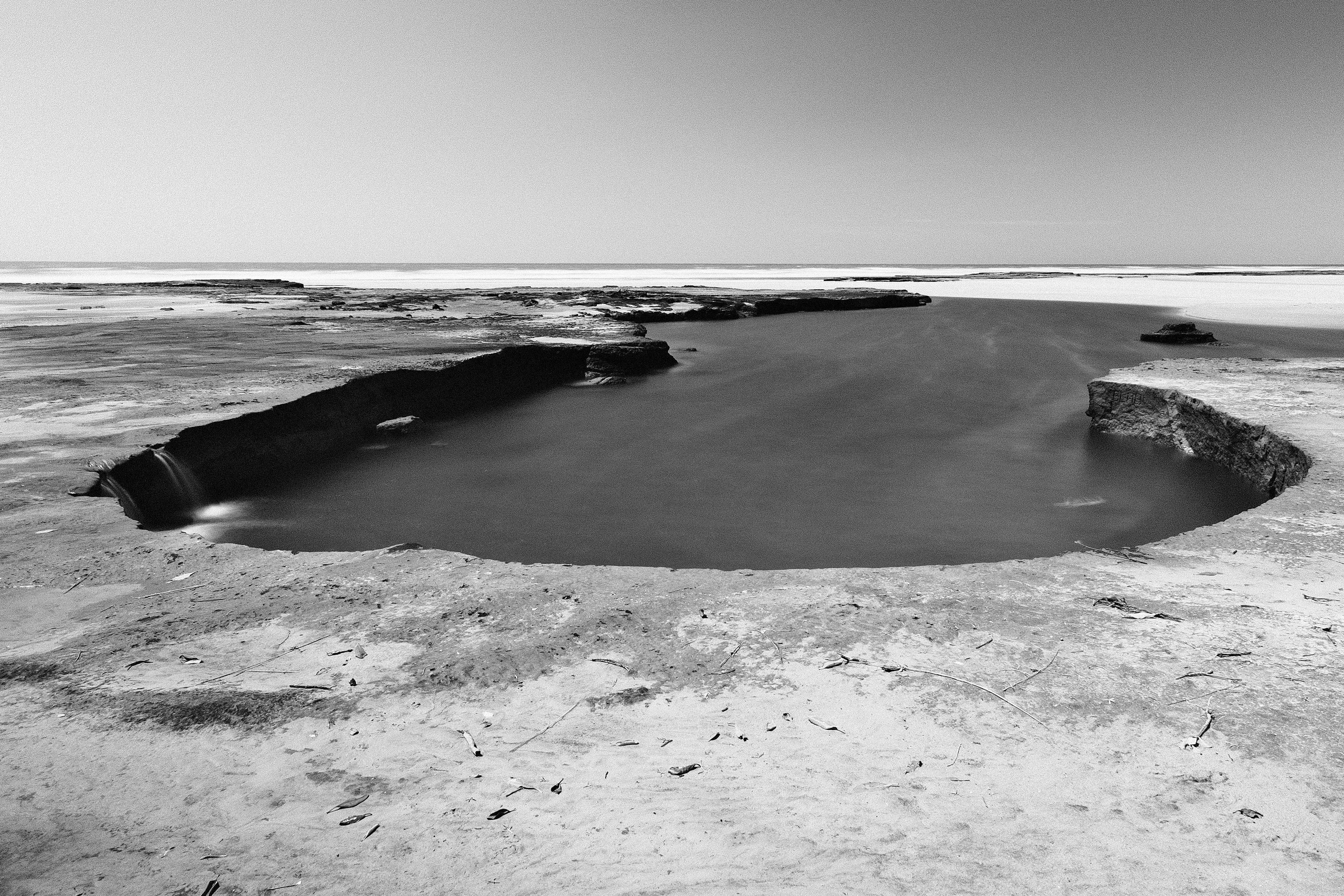
Natural pool near the ocean.
Fujinon XF 16mm F2.8 R WR @f/11
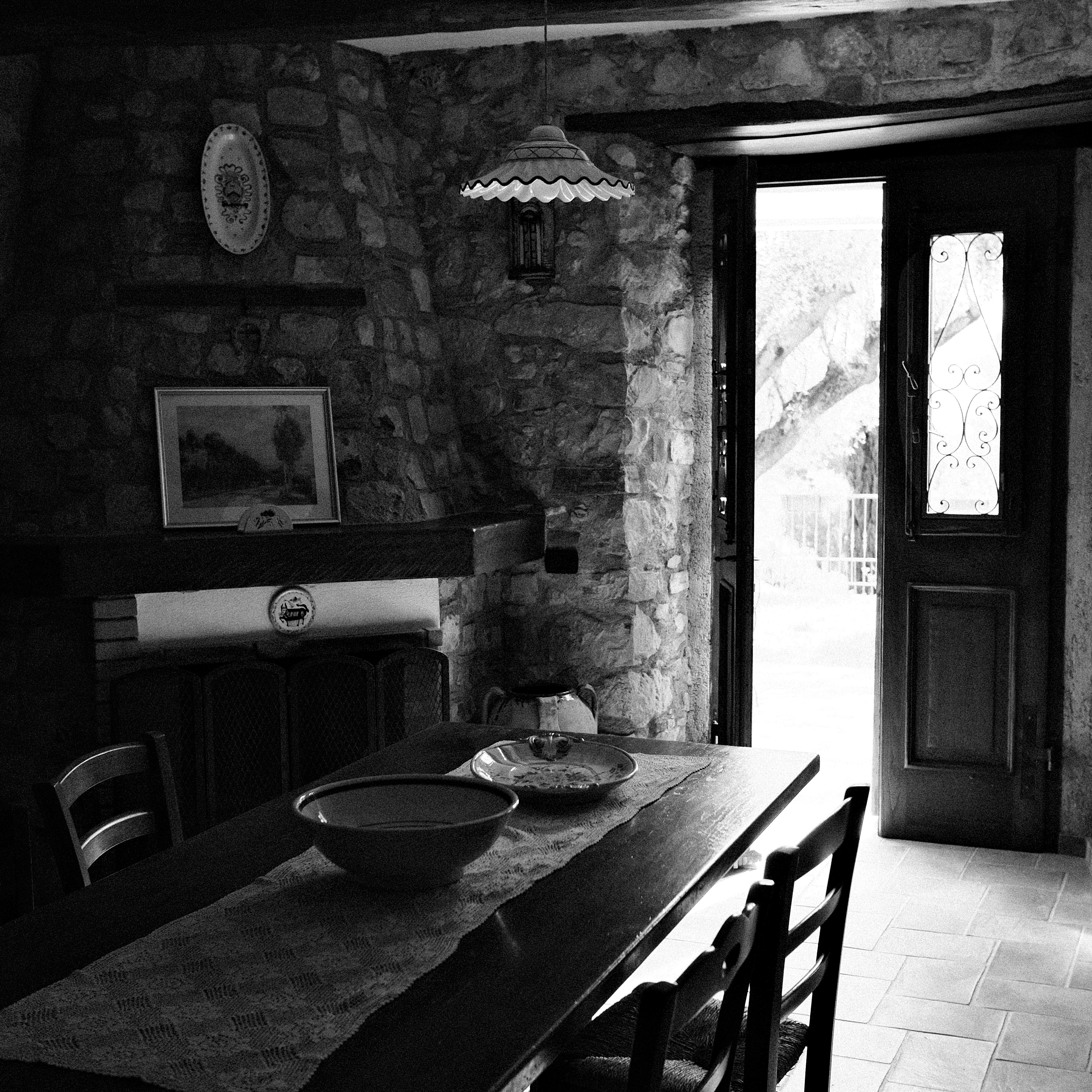
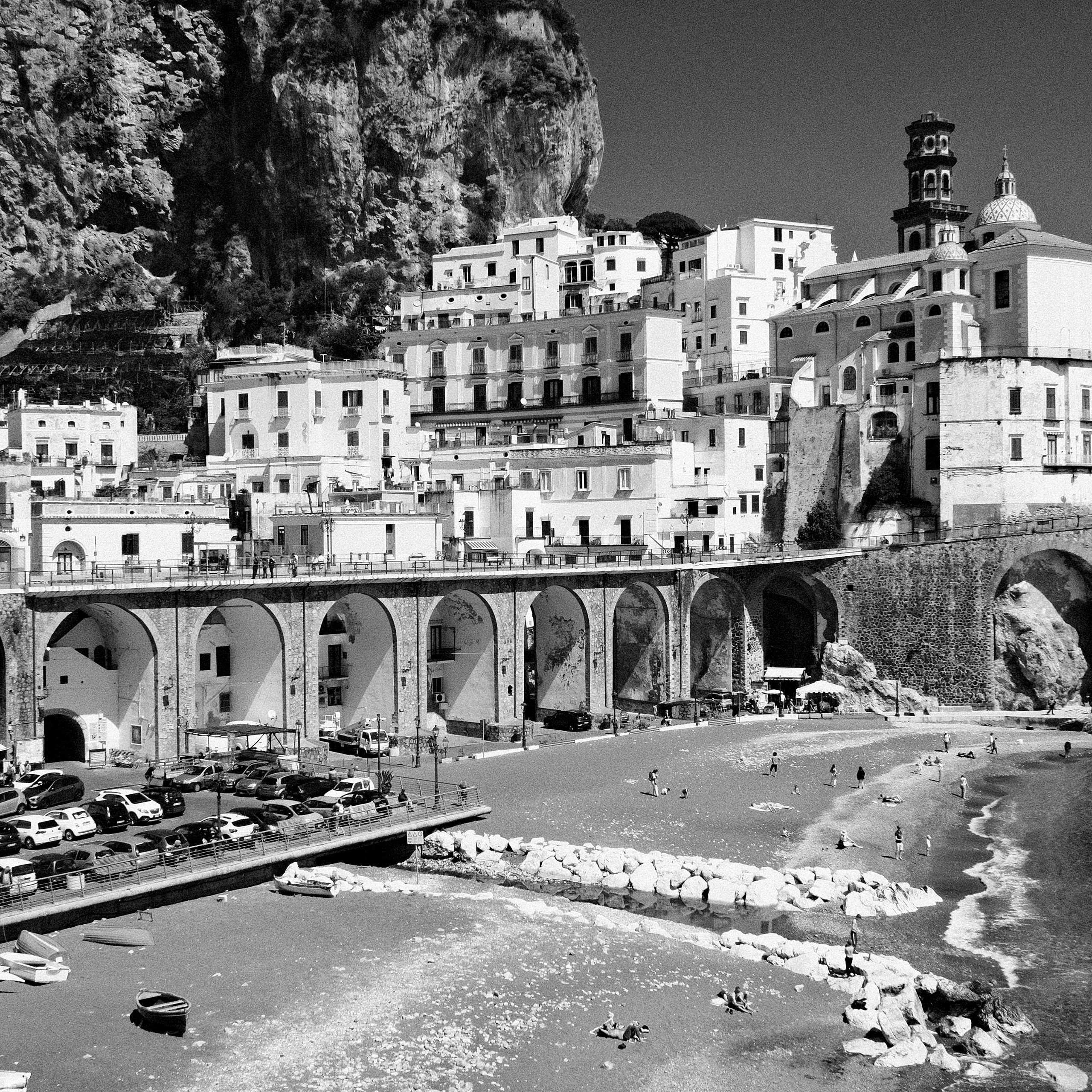
After lunch we proceeded to visit a couple more lagoons and another natural pool within the park. We took our time at our last lagoon, swimming while waiting for the sun to set. When it was about time, we drove to higher ground to see our third and last sunset in the Natural Park of Lençóis Maranhenses.
We headed back to our lodge and rested well, preparing ourselves for the long trip back to Rio de Janeiro, which would take use through water, road and air for the whole day once more.
Back to Top